
Inside Out Lectionary Letters
The Lectionary is a journey through the Bible over a 3-year span. Many churches follow this pattern. The first year began on November 30th, with the first Sunday of Advent. I am writing weekly reflections on the Gospel reading and the Psalm reading. The reflections are specifically from a psychological and inner-spiritual-formation perspective. The Gospel reading commentary comes out the Monday before the Sunday it is used in churches. The Psalm commentary will come out on Thursday. I write them with my daughters in mind, but I’ve found that many others resonate with them as well. If you’d like to follow along, subscribe below and I’ll send each week’s Inside Out Lectionary post right to your inbox. Or you can simply bookmark this page and visit when you want.
Let Me Think About It
I am a lot better at thinking about my feelings than feeling my feelings. There may be an underlying belief that I can think them away!
Dear Sutton and Savannah,
I am a lot better at thinking about my feelings than feeling my feelings. There may be an underlying belief that I can think them away!
One of the many traits that I admire in both of you is that you never seem to vilify your feelings. Rather you appear to hold them with acceptance and grace. Thank you for being my teacher and modeling a better way.
-Dad
Inside Out Lectionary Letters
Year A - 5th Sunday of Easter (Texts, Art, Hymns)
Readings for Sunday, May 3, 2026
Acts 7:55-60 / Psalm 31:1-5, 15-16 / 1 Peter 2:2-10 / John 14:1-14
Summary of Psalm 31:1-5, 15-16
The language of this Psalm indicates an apparent threat that is imminent, though we don’t know the specific historical setting. The psalmist seems to express a movement from urgent vulnerability to surrendered trust.
Scripture as Mirror of the Soul
The words of this psalm are used by Jesus at the time of his death. He actually quotes two different psalms. The first is from Psalm 22. Jesus uses the opening line, “My God, my God, why have you forsaken me?” Then, moments before his death he quotes from Psalm 31, “Into your hands I commit my spirit.”
Maybe there is not always a movement from anguish to trust, or from discouragement to hope. Maybe instead we are invited to hold seemingly contradictory emotions—grief and hope, fear and courage, anguish and trust—without forcing one to disappear in preference for the other.
In Psalm 31 the poet speaks of vulnerability and confidence in the same breath. Some feelings we have are very unsettling. Some emotions we push away, hoping that others won’t see our “weakness.” Some feelings pose a threat to our ego, and the way we want to be seen by others. And if those traits are ever exposed, we often want to quickly replace them with traits that will be more admirable and acceptable.
The inner journey is not about destroying or overcoming uncomfortable parts of ourselves, but to integrate them. They become less frightening when recognized, named, and given room to exist.
Unexpressed parts often hold valuable qualities. The anger you fear may be the energy you need to set boundaries. The sadness you push away may open the door to empathy. The creativity you repress may be the path to joy and meaning. When we hold opposing emotions in balance, we experience the power and insight of the integrated pair. This inner reconciliation is a path to wholeness.

Sailing, Takes Me Away
Those who obey Jesus’s commands become the dwelling place or home of the divine! And Jesus’s command is simply this, love one another.
Dear Sutton and Savannah,
You know I like sailing. I’ve read books about sailing. I’ve taken classes on sailing. And I’ve worked on assembling sailboats. The knowledge and information is incredibly helpful. But I believe that the essence of sailing rests on these two questions: 1. Can you feel the wind? 2. Can you feel how the wind affects the boat and its sail? This is the core of sailing: a relationship between you, the wind and the boat. Pay attention to this, and everything else follows.
-Dad
Inside Out Lectionary Letters
Year A - 5th Sunday of Easter (Texts, Art, Hymns)
Readings for Sunday, May 3, 2026
Acts 7:55-60 / Psalm 31:1-5, 15-16 / 1 Peter 2:2-10 / John 14:1-14
Summary of John 14:1-14
This passage is part of a larger discourse of Jesus, given to the disciples in the hours leading up to his betrayal and death. Jesus is preparing them for a new era in their relationship to him. The disciples seem unsettled and confused.
Scripture as a Mirror of the Soul
One approach to the “inside-out” perspective is to ask what part of ourselves is represented by the disciple Thomas and what part is represented by Philip.
Thomas wants more information. This might be the part of us that believes if we know more we will have more control. Jesus’s response challenges that posture. Knowing and recognizing the divine voice is the path to life, not more information.
The Philip part of us wants verifiable proof; “show us the Father.” Jesus once again responds by inviting them into deeper relationship with himself. It seems to challenge the old adage, “Seeing is believing,” with the argument that “Believing is seeing.”
This week’s gospel reading, along with next week’s reading, contains an invigorating foundation for these Lectionary Letters. In many ways this passage forms the basis for the inward journey. In verses 2 and 3 Jesus states that he is preparing a dwelling place (some translations say mansions or rooms). The only other place in scripture this word is used is in verse 23. There we read that those who obey Jesus’s commands become the dwelling place or home of the divine! And Jesus’s command is simply this, love one another.
The inner journey is built upon the idea that the Advocate (verse 16), the Spirit of Truth (Verse 17), Jesus and the Father (verse 23) abide within. Therefore, the inner journey is the exploration of the relationships within. Everything else follows.
It Takes a Thief
We vilify the Pharisees and remain blissfully unconscious of the inner work that waits for our attention. But what if the thief is part of us, part of me. This, then, becomes a story about the soul.
Dear Sutton and Savannah,
Being honest with yourself, about yourself, is hard work. At least it has been for me. But I believe it is the beginning of wisdom and peace.
-Dad
Inside Out Lectionary Letters
Year A - 4th Sunday of Easter (Texts, Art, Hymns)
Readings for Sunday, April 26, 2026
Acts 2:42-47 / Psalm 23 / 1 Peter 2:19-25 / John 10:1-10
Summary of John 10:1-10
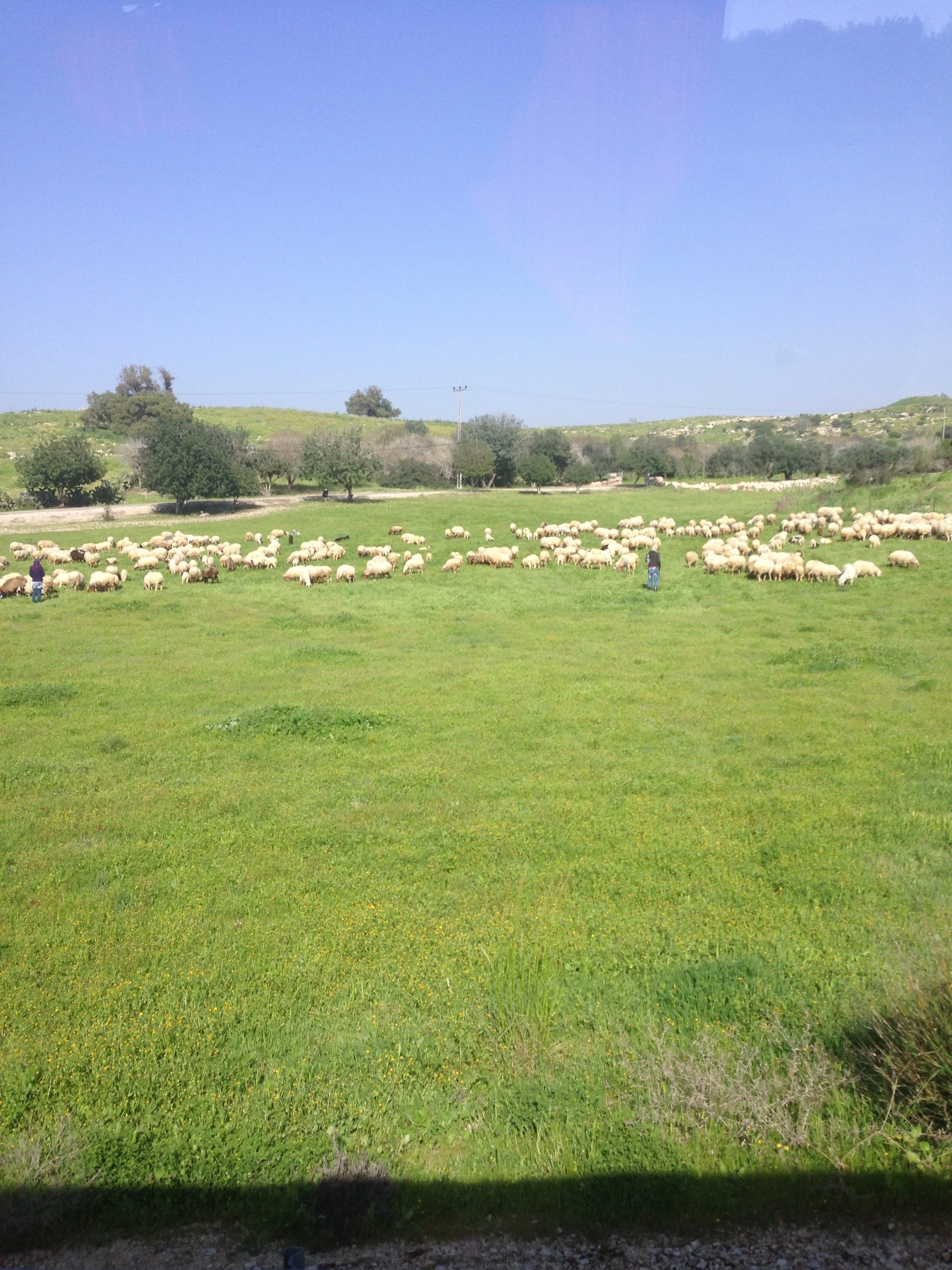
Jesus uses the imagery of a shepherd and a flock of sheep to teach his disciples and to confront the Pharisees.
Scripture as a Mirror of the Soul
I didn’t grow up in a herding culture. I’ve never lived on a farm. Other than household pets, I’ve had very little exposure to animals. However, the story provides the central point; there is a difference between how the shepherd interacts with a sheep and how a thief acts with the sheep. We quickly conclude that the relationship of the shepherd to the sheep is good and the relationship of the thief to the sheep is not good.
When this story is taken as a teaching on the inner life, this passage provides powerful instruction with disturbing implications.
Who is the thief? Our natural tendancy is to externalize the story. The thief represents the Pharisees of course! We vilify the Pharisees and remain blissfully unconscious of the inner work that waits for our attention. But what if the thief is part of us, part of me. This, then, becomes a story about the soul.
The thief operates out of greed. Or fear. Or anger. It represents that inner space in all of us that compares ourselves to others and believes we have been wronged or treated unjustly. It wants to make things right by retribution. We hatch plans in darkness, knowing that they won’t stand up to the light of day. We are afraid there are not enough resources to go around and use that to justify our shortcuts, schemes and selfish plans.
However, all the other parts of the self know that the voice of the thief is not the one that leads to green pastures or still waters. There is an inner tug of war.
The inner thief needs to be faced, and heard. It’s pain, or frustration, or anxiety is real. When ignored it can become as ferocious as a wolf, or as frightened as a hired hand. But when heard, it speaks of our insecurity, desperation and pain. The divine voice within can then create space for healing and restoration. And the other parts of ourselves can rest.

Psalm 23
If the opening line is a commandment to the faithful, then it seems like an insensitive statement and an unattainable state. However, everything changes when this line and this psalm are viewed as a reflection of the inward journey.
Dear Sutton and Savannah,
I love this psalm. It has the uncanny ability to make me feel like everything is going to be okay. I hope you find passages, stories, music, sayings or art that help you feel centered, grounded and steady. Every time you feel anxious, afraid, sad or uncertain, let these gifts wrap around you like a favorite sweatshirt or a comfy blanket.
-Dad
Inside Out Lectionary Letters
Year A - 4th Sunday of Easter (Texts, Art, Hymns)
Readings for Sunday, April 26, 2026
Acts 2:42-47 / Psalm 23 / 1 Peter 2:19-25 / John 10:1-10
Summary of Psalm
This is one of the most loved passages of scripture. And rightfully so. It is inviting, expansive, comforting and hopeful. It is used at dedications, weddings and funerals. Each phrase is beautifully constructed and infinitely reflective. However, until recently I don’t think I ever considered that its premise might be inherently wrong.
Scripture as a Mirror of the Soul
The psalmist begins with, “The Lord is my shepherd, I shall not want.”
I live a very privileged life. I don’t face housing insecurity or food insecurity. I’ve had easy access to education, health care, transportation and employment. But I am in a very small minority. Most people face “want” every day!
If the opening line is a commandment to the faithful, then it seems like an insensitive statement and an unattainable state. However, everything changes when this line and this psalm are viewed as a reflection of the inward journey.
Verse 1. If we follow the divine voice within, we have everything we need for the inner journey.
Verse 2. Through grace we will find rest and renewal in green pastures.
The divine will guide us to the still waters of the unconscious.
Verse 3. And this is what brings restoration to the soul.
Verse 4. We are invited to face the shadow, recognize our fears and consider our death.
We have within us discipline and guidance for the journey.
Verse 5. Our inner enemies become companions at the table of love.
Verse 6. And our soul becomes the dwelling place of the divine spirit forever.

Earning Grace
Transactional love keeps me forever defined by the situation that held me captive. The transaction becomes an essential component of my identity: I am what I earn.
Dear Sutton and Savannah,
I am a firm believer in the old adage that no one should be defined by their worst moment. I have quite a few worst moments, and it is far too easy to ruminate on them and allow them to pummel my sense of self worth. If worth or identity is based on what I do, then I will always feel like I am climbing an endless hill, never reaching the top. But if my identity is based on who I am and the unearned, endless love of the Creator, then I can experience the peaks and valleys without my worth being identified by either. One of my best reminders of a welcomed, but unearned, moniker is being identified as your dad. That’s the best.
-Dad
Inside Out Lectionary Letters
Year A - 3rd Sunday of Easter (Texts, Art, Hymns)
Readings for Sunday, April 19, 2026
Acts 2:14a, 36-41 / Psalm 116:1-4, 12-19 / 1 Peter 1:17-23 / Luke 24:13-35
Summary of Psalm 116
Psalm 116 is a personal song of gratitude that reflects a journey from distress to deliverance. The psalmist recalls a time of deep anguish. A cry for help produces a divine response marked by mercy, compassion, and preservation. The psalm then shifts to gratitude. It is a movement from desperation to devotion, from being held by fear to being held by mercy.
Scripture as a Mirror of the Soul
How do we respond to grace? To kindness? To forgiveness? To deliverance? Most of us would respond with gratitude. That is the response of the psalmist. And that spirit of gratitude leads the psalmist to specific acts of devotion.
In the words of the psalmist, because God listened, I will call on Him… (verse 2). How can I repay the Lord…(verse 12)? I will lift the cup…(verse 13). I will fulfill my vows…(verses 14 & 18). And, I will offer a sacrifice…(verse 17). These are beautiful responses, but they also appear to be very transactional. Our instinct is often to repay, to earn, to balance the scales.
In Psalm 116, the movement is: God helped me, so now I will respond appropriately by paying God back. This is reciprocal language. There is a part in all of us that understands life through this type of exchange: If I am helped, I should respond. If I receive, I should give back. If I am saved, I should prove that I deserved it.
This part of us is not bad, and certainly not evil. Rather, it is moral, sincere and responsible. It is an effort to create order and fairness in a world that feels unstable.
This part of us cannot quite believe that love might be freely given. When we don’t yet trust love, we try to repay it. We want to prove our devotion. That is Psalm 116.
Perhaps we could consider allowing ourselves to be held by something we do not have to earn. Transactional love keeps me forever defined by the situation that held me captive. The transaction becomes an essential component of my identity: I am what I earn. Unconditional love frees me, because sometimes the deepest change is not that I have been rescued from the struggle, but that I am no longer defined by it.
Walking in the Dark
I am far more adept at the language of logic, but that language is woefully inadequate when it comes to expressing the breadth and depth of the human experience.
Dear Sutton and Savannah,
I wish I had been a better example of how to pay attention to the emotions and feelings of life. I am far more adept at the language of logic, but that language is woefully inadequate when it comes to expressing the breadth and depth of the human experience. Your (and my) emotions provide the color and texture to life. Both the highs and the lows are fertile ground for growth and insight. My journey to listen to my emotions has been a lot longer than the 7-mile trip from Jerusalem to Emmaus. I hope you can take a more efficient route.
-Dad
Inside Out Lectionary Letters
Year A - 3rd Sunday of Easter (Texts, Art, Hymns)
Readings for Sunday, April 19, 2026
Acts 2:14a, 36-41 / Psalm 116:1-4, 12-19 / 1 Peter 1:17-23 / Luke 24:13-35
Summary of Luke 24:13-35
Cleopas and his companion are on a 7-mile walk from Jerusalem to Emmaus, probably about 2 hours. There is a lot to talk about given the events in Jerusalem of the last three days. Along the way they are joined by a stranger, whom they do not recognize.
Scripture as a Mirror of the Soul
There are many emotions found in this passage. The text says specifically that Cleopas and his friend are sad. It also indicates there is confusion around how to understand the recent events. Their conversation with the stranger they meet (Jesus) implies that they were curious about all he was explaining. They exhibited great kindness and generosity when they invited him to stay with them for the night. Finally, they were so energized by what happened that they walked (or ran) back 7 miles to Jerusalem, likely in the dark, to tell the others what they had experienced.
Our thoughts and decisions can certainly influence our emotions, but often emotions seem to arise out of the unconscious without invitation and without warning. Sadness or grief can envelope us before we realize what is happening. Fear or anger can erupt as fast as the endocrine system can pump adrenaline into our blood vessels. Whether it is a fast reaction to a startling event, or a slow burn that drains our energy, emotions can hold us hostage, or keep us buoyant.
The inner journey invites us to pay attention to our emotions; not to deny them, discipline them, ignore them, or give them free rein, but to listen to them. Emotional mindfulness is essential to inner work.
Many of us are clueless when asked the question, “How are you feeling?” Or, “What are you feeling?” It seems like a foreign language; inaccessible and undefined. Or we might be the opposite, and feel overwhelmed by our emotions. Both are okay. We have a divine companion, on the journey with us, who patiently travels in whatever direction we are going, and teaches us.
The disciples on the road to Emmaus were figuratively traveling from what they once believed to be true, to the unknown of what the future holds. They are trying to reconcile a story that no longer makes sense. The mental structure they had created, had collapsed. Sometimes we walk in confusion, we speak from disappointment, and only later do we see that something was unfolding within us all along.
The invitation is not to force understanding, but to remain present, with our emotions, on the journey—to stay open to the possibility that even in disorientation, something is being re-formed.
A Resurrection of a Different Kind
Despite the hardships in the world that we all encounter there is a place of refuge and safety to be found. Not on the outside, but on the inside as we turn to the Divine that is welcoming all of us.
Dear Jeremy, Tate, and Katelyn-
You were young bystanders to your dad’s recovery efforts from a head-on collision that left him with a traumatic brain injury and in a coma for months. Emerging from his coma was painstakingly slow. He gradually became aware of his multiple physical losses including paralysis in all his limbs and his mental state - short-term memory loss, diminished processing skills, and inability to control his emotions. This realization left him in deep despair for months. Later, anger and frustration reared their ugly heads. Why would they not? But, after two years of rehab an amazing thing happened. His signature sense of humor and gratitude reappeared, along with a peace and acceptance of his condition. It was a remarkable resurrection.
-Mom
Inside Out Lectionary Letters
Year A - 2nd Sunday of Easter (Texts, Art, Hymns)
Readings for Sunday, April 12, 2026
Acts 2:14a, 22-32 / Psalm 16 / 1 Peter 1:3-9 / John 20:19-31
Summary of Psalm 16
Psalms 16 is traditionally attributed to King David and is called a Miktam or a “golden” prayer. Perhaps it’s special because it speaks to all of us and our human condition. David is a victorious and popular king but also a man who had his share of suffering. He’s proclaiming to us that despite the hardships in the world that we all encounter there is a place of refuge and safety to be found. Not on the outside, but on the inside as we turn to the Divine that is welcoming all of us. David is foreshadowing a coming Messiah who will overcome the worst the world has to throw at us.
Scripture as a Mirror of the Soul
We live in a time when we have 24 hour access to the horrors taking place in our world - whether in the Middle East or Minneapolis. It may seem naive or even foolish to think we can find a refuge from all that surrounds us. It’s obvious we need protection from things outside ourselves, but what about things within? Our fears, our worries, our depth of sadness, our sense of unworthiness, our resentments, our anger. These enemies of our souls have been our companions since childhood. Some we battle on a daily, hourly basis. Others only occasionally when something or someone launches an assault.
Where do we turn when these inner attacks occur? Do we look outward for our help? Do we get busy with accomplishment? Or distract ourselves with entertainment? These impulses offer temporary relief but in the end may only “multiply our sorrows.” Or, do we seek shelter in the loving Presence that invites us in to take refuge? That invites us to sit, be still, and experience our own new life.
Julian of Norwich was an English mystic in the 1300’s. She is known for her famous line,
“All shall be well, and all shall be well, and all manner of things shall be well.”
To us, that may sound like a fairy tale and we’d be fools to believe. But like David, Julian wasn’t saying this through rose-colored glasses - she lived through serious illnesses, years of the plague, and economic hardships. That’s why her ideas still resonate: she’s not denying suffering—she’s saying it doesn’t have the final word. Even when life feels chaotic or painful, everything is ultimately held within a greater goodness.
An illuminated object lesson unfolded right in front of me as I watched my late husband Steve with his injured brain and body find peace and live out “all is well” from the inside out. Very little changed for him on the outside. What physical and mental progress he made was slow, painful, and incomplete. Yet everything changed on the inside. Like David, I saw in Steve a person whose heart became glad, a soul at peace, and a body that rested secure in the love of God. If it could be true for him, I have to believe it can be true for us.
Name Your Doubt
Could our doubts, instead of being a barrier to our wholeness, be a path to our healing? What if instead of hiding our doubts behind closed doors, we exposed them to the light and love of God?
Dear Jeremy, Tate, and Katelyn,
I remember driving home from church one evening. Jeremy, you were five and buckled in the back seat of our Honda Accord with your little brother beside you. Out of nowhere - or so it seemed - you asked, “Mom, how do we know all this God stuff is true?” I was shocked. I might have expected this question coming from a teenager but not from a kindergartner. I don’t exactly recall how I answered you, but I’ve never forgotten the question. I hope all three of you continue asking the big questions.
-Mom
Inside Out Lectionary Letters
Year A - 2nd Sunday of Easter (Texts, Art, Hymns)
Readings for Easter Sunday, April 12, 2026
Acts 2:14a, 22-32 / Psalm 16 / 1 Peter 1:3-9 / John 20:19-31
Summary of John 20:19-31
This week’s gospel reading paints a picture of the disciples in crisis. Their beloved Rabbi (teacher) has been tortured, crucified and buried. They’ve heard rumors that he has been seen alive. But how are they to believe that? What they do believe is that the authorities are now coming after them. So they huddle together, behind bolted doors, uncertain of their safety or their future when Jesus shows up. Thomas is the only one of them not present for the big reveal. A week later, he gets his turn.
Scripture as a Mirror of the Soul
Jesus understands how mind-boggling it has to be for his friends to see him alive! Almost immediately after making this unexpected appearance, he offers them his scarred hands and side. He does this without waiting for them to ask or chiding them for needing proof. Perhaps one of history’s greatest “show and tell” moments.
Afterwards, can you imagine their eagerness to let Thomas know that they have seen Jesus alive? Thomas requests the same opportunity that they had, the same chance to see the hands and side of Jesus. So why all this contempt down through time for Thomas? Why is “Doubting Thomas” a moniker for lack of faith or faithlessness? Could our disdain for Thomas say more about us than about him? Do we have doubts that we dare not look at, let alone speak? Questions we pretend don’t exist so we cover them up with masks of certainty and bluster?
Thomas is no different than all the other followers of Jesus who also had their doubts. As do we. But Thomas seems to have the ability - and the courage - to look inside. To notice his doubt and expose it. Have we been formed in the belief that our questions and doubts are unacceptable? Even shameful? Some would say sinful?
What if we were able to look inward and acknowledge that we have doubts…about our faith? Yes, surely. But also about ourselves, our worthiness, our loveability. Could our doubts, instead of being a barrier to our wholeness, be a path to our healing? What if instead of hiding our doubts behind closed doors, we exposed them to the light and love of God?
There’s another place in scripture where Jesus gives us a show-and-tell moment. It’s when he places a child among these same disciples and stresses how important it is for us to become like one of them. That has many potential applications, but I have to wonder if one of them might be in the willingness to admit doubts. To question. I was fortunate enough to experience such a sacred moment as I sped down a darkened road with two young boys in tow. Forty years later, the memory of a 5-year-olds freedom to express his doubt reminds me that I am perfectly safe to bring my questions and even my doubts to a loving God.
Easter Trash
Snippet: The ego has a tough time letting go of the curated way it has come to present itself to others. But when we engage and listen to the rejected parts, they often transform into sources of energy, strength and growth.
Dear Sutton and Savannah,
When I was a kid, I don’t remember anyone talking about recycling, or taking care of the environment. The mantra, “reuse, repurpose, recycle” was years away from nearly anyone’s consciousness. “Dispose, discard and buy more” was what kept the economy growing. I remember a time when people would throw trash out the car window as you were going down the highway. And I also remember a powerful commercial that showed some trash being thrown out a car window and coming to a stop by the feet of a Native American, who had a tear coming down his cheek at the disrespect shown to creation. Fortunately things have changed, but maybe not enough. (And maybe not enough in the inward journey.)
-Dad
Inside Out Lectionary Letters
Year A - Easter Sunday (Texts, Art, Hymns)
Readings for Easter Sunday, April 5, 2026
Acts 10:34-43/ Psalm 118:1-2, 14-24 / Colossians 3:1-4 / John 20:1-18
Summary of Psalm 118
Psalm 118 depicts a journey from distress and threat to deliverance and renewed life. It might have been a communal song used in a processional while traveling toward the temple. So, maybe a song about an inward journey while on a literal journey to the sacred space of the temple.
Scripture as Mirror of the Soul
The shadow side of the psyche develops alongside the ego. As children, we learn which behaviors and expressions are rewarded and which are punished or dismissed. The traits that earn approval become part of the “acceptable self.” This is the ego identity we show to the world. In contrast, the traits that bring disapproval get pushed into the background, discarded, trashed. They do not vanish—they are simply hidden. These hidden aspects form the shadow side of our life.
Shadow traits are not “bad” or wrong, nor do they always carry negative connotations. Some may be positive qualities like creativity, tenderness, or assertiveness that, for whatever reason, didn’t feel safe to express in childhood. Others may be painful emotions like anger or grief.
The re-emergence of an unexpressed part of yourself, a part you previously discarded or trashed, can feel threatening for several reasons. First, and maybe foremost, it challenges identity. If you have spent years presenting yourself as strong, independent, or cheerful, facing a vulnerable or angry part may feel like betrayal. The ego has a tough time letting go of the curated way it has come to present itself to others. But when we engage and listen to these rejected parts, they often transform into sources of energy, strength and growth.
The anger you fear may be the energy you need to set boundaries.
The sadness you push away may open the door to empathy.
The creativity you repress may be the path to joy and meaning.
The psalmist writes in verse 22, that “the stone that the builders rejected has become the chief cornerstone.” This is the movement of the entire psalm; the resurrection of that which has been discarded into that which becomes a cornerstone of life and strength. Thanks be to God.
Prayer: May we pay attention to this principle in our inmost being as we journey to the sacred space within.
Amen
What’s In A Name?
Easter Sunday - What’s In A Name?
I go to the tomb out of respect for that which I believed was good, but truth be told, I’m also going there to bury my hope. I tried the inner journey and now I feel lost. I’m not sure I would recognize love if it stood right in front of me.
Dear Sutton and Savannah,
Sometimes the phone is a terrible task master. I once heard a wonderful reminder of the role it was intended to play: The phone was created for my convenience, I was not created for the phone’s convenience. However, when the phone vibrates, indicating an incoming call or text, and I look down to see your name as the source, I melt. I can hear your voice before I even answer the call. And then something in me shifts as I hear, “Hi Dad.” So, thank you for all you’ve done to make that two-word greeting so powerful.
-Dad
Inside Out Lectionary Letters
Year A - Easter Sunday (Texts, Art, Hymns)
Readings for Easter Sunday, April 5, 2026
Acts 10:34-43/ Psalm 118:1-2, 14-24 / Colossians 3:1-4 / John 20:1-18
Summary of John 20:1-18
In this Easter Sunday reading, Mary Magdalene goes to the tomb where Jesus was buried and finds the stone removed. She runs to tell Peter and John, who come, see the empty tomb, and leave. Mary remains, weeping. She looks into the tomb, encounters two angels, and then turns and sees Jesus, though she does not recognize him. It is only when he speaks her name—“Mary”—that she recognizes him and becomes the first to tell the others that he is alive.
Scripture as Mirror of the Soul
The gospel writer includes six characters in the telling of the resurrection story; Peter, John (the author of this gospel, self described as the disciple Jesus loved) the two angels, Mary Magdalene and Jesus. One path for exploration is to imagine what Peter, John and Mary were experiencing. But that could allow us to keep our analysis and reflection impersonal. Let’s take another pathway and consider what parts within us these three characters might represent.
Peter and John might represent the part of me that thought I had it all figured out. Life was just beginning to make sense and I thought I had things under control. Then catastrophe strikes. I’m not just bewildered, or confused, but I feel crushed under the weight of uncertainty and loss. I have tried to be faithful, and believed I knew what faithful looked like. What I didn’t realize was that I was putting more faith into my expected outcomes than into my inner restoration. I thought I was getting it, but now, I don’t know.
What part of me might Mary represent? Maybe that is the part that has been wounded and healed, and then wounded again. Shame on me for trusting again; for believing there was something better. I feel destined for disappointment. I go to the tomb out of respect for what I believed was good, but truth be told, I’m also going there to bury my hope. I tried the inner journey and now I feel lost. I’m not sure I would recognize love if it stood right in front of me.
All I want to do is run; to be anywhere but where I am, because I don’t feel like I know who I am anymore. But when the parts of me work up the courage to peek into the shadows of the tomb, I don’t see what I expected to see. That which I thought was buried in the shadows is not there at all. Just the divine voice within that patiently engages, and points me toward love, pure love. As I said before, I wouldn’t recognize it if it stood right in front of me, and I didn’t. Not until love said my name. And it wasn’t just my name, it was the way that love named my identity. You see, love knows me far better than I know myself. And in that moment, I feel like I can do nothing other than collapse at love’s feet, for the me I have longed to know has just been resurrected.
When the Shadow Will Not Let Go
Psalm 31
There are times in the inner life when the shadow does not feel like a part of us—it feels like all of us.
Dear Savannah and Sutton,
There is a quiet courage in turning toward what hurts rather than away from it. Not to analyze it, not to fix it, but simply to acknowledge it without pretending it is something else. Because what we refuse to face tends to harden. But what we are willing to face can soften and become fertile soil for something new.
-Dad
Inside Out Lectionary Letters
Year A - 6th Sunday in Lent (Texts, Art, Hymns)
Passion Readings for March 29, 2026
Isaiah 50:4-9a / Psalm 31:9-16 / Philippians 2:5-11 / Matthew 26:14-27:66
Scripture as a Mirror of the Soul
Psalm 31 is a psalm of trust, but not the kind that avoids pain. Verses 9–16 sit in the middle of the psalm and give voice to an extended season of distress. The language is relentless: sorrow, grief, anguish, groaning, weakness, failure, rejection, slander, and fear. The psalmist is not describing a bad day or even a difficult season—it feels cumulative, like years of wear on the soul. Relationships have fractured. Reputation has eroded. The future feels uncertain. The inner and outer worlds both feel hostile.
There are times in the inner life when the shadow does not feel like a part of us—it feels like all of us.
The language of this psalm captures something that many of us recognize but rarely say out loud; the sense of being worn down over time. The quiet erosion of hope. The feeling of being forgotten, misunderstood, or trapped in patterns that don’t seem to loosen their grip. It is the texture of depression, of long-term anxiety, of grief that doesn’t resolve neatly.
And in those seasons, the instinct is almost always the same: to run, to hide, to numb, or manage the pain just enough to get through the day.
However, Psalm 31 does something different. It does not rush to resolution. Nor does it deny the pain. Instead it turns and faces it. And in doing so, something subtle begins to shift. The shadow side begins to change from antagonist to companion: From something I want to destroy, to something I need to hear. From something that embarrasses me to something that holds me in balance.
And then the hope that is birthed by trust is proclaimed in the prayerful declaration:
“My times are in your hands.”
This is not certainty. There is no guaranteed outcome. It is trust that even in the midst of unresolved pain, something larger is holding what we cannot yet hold ourselves. Turning toward the agony is not surrender to it, but the beginning of transformation. So, what if the willingness to face the shadow, the hurt, the fear—honestly, without panic—is what makes the ground within us tender enough for the seeds of grace?

Craving Certainty
Passion Sunday - Craving Certainty
There is a fork in the pathway of the inner journey. The familiar path…craves certainty but is constantly triggered by that which doesn’t fit. The other path is paved with grace. It leaves certainty behind and surrenders the need to be right. It allows love to be the center that holds everything together.
Dear Sutton and Savannah,
I don’t know. I don’t know the answer to most of life’s really good questions. And an answer that I believe is right for me, may not be right for someone else. And it’s not because I think nothing is knowable. I don’t think that at all. I just believe that there are many questions (maybe most) that could have multiple good answers. I wish I had been better at saying “I don’t know” in your younger years. You probably knew that I didn’t know what I was talking about and were just kind enough not to say anything. One thing of which I am certain, I love you. I know that for sure, and everything else follows.
-Dad
Inside Out Lectionary Letters
Year A - 6th Sunday in Lent (Texts, Art, Hymns)
Passion Readings for March 29, 2026
Isaiah 50:4-9a / Psalm 31:9-16 / Philippians 2:5-11 / Matthew 26:14-27:66
Summary of Matthew 26:14-27:66
The storyline of the gospel reading accelerates toward its breaking point. Betrayal, denial, prayer, political pressure, religious judgment, and execution all unfold in rapid succession. Nearly every character fails in some way—Judas betrays, Peter denies, the religious leaders condemn, Pilate deflects, and the crowd shifts. The movement is relentless, and it crescendos at the cross.
However, Judas is not pure villain—he is conflicted, regretful, and undone by what he has set in motion. Peter is not weak—he is devoted and afraid at the same time. Pilate is not purely corrupt—he hesitates, questions, and then gives in. The religious leaders are not irrational—they are trying to protect a system that has given their world order and meaning.
No one here is purely anything.
And that may be the most unsettling truth of all.
Scripture as Mirror of the Soul
When we hear this story, we are likely caught in the same treacherous loop that is the plight of humanity. It is a thread that runs beneath every scene in this passage, and it is not betrayal or fear—but the relentless craving for certainty.
The religious system was built on it.
The political system depended on it.
The crowd demanded it.
People want to know who is right and who is wrong. And Jesus would not cooperate. He healed when he wasn’t supposed to. He forgave without permission. He spoke with authority but refused to weaponize it. He moved in spaces that did not fit the appropriate categories.
He lived in the gray. And that made him dangerous, because “gray” is not easily controlled. Gray cannot be legislated or systematized. It cannot be used to reinforce power or protect identity. It requires humility, flexibility, and trust.
So the system did what systems built on certainty always do when threatened—it removed the threat.
This is not just a story about them. It is a story about us. It is a story about me. There are parts within me that crave certainty because uncertainty feels unsafe. These parts try to regulate my inner world with rules, discipline, denial, and shame. Uncertainty creates tension and tension is uncomfortable; at times, intolerable.
However, the divine voice within does not organize life around certainty, but around grace. It creates space where the unknown is not feared but engaged. Where we can say, with honesty, “I believe this… but I could be wrong.”
That is not weakness. It is freedom.
It loosens the grip of rigid thinking and opens the door to curiosity, humility, and growth. It allows the whole self—not just the acceptable parts—to be held together.
The story is two thousand years old, but as relevant today as it has ever been. There is a fork in the pathway of the inner journey. The familiar path leads to more black and white thinking and requires the gray areas of life to be regulated, controlled or expunged. It is the path that craves certainty but is constantly triggered by that which doesn’t fit. The other path is paved with grace. It leaves certainty behind and surrenders the need to be right. It allows love to be the center that holds everything together.
Regrets, I’ve Had A Few
Regrets, I’ve Had a Few - Psalm 130
I want to treat my past with grace and operate from the posture that my choices were the best I knew to do given the resources, knowledge and level of maturity I had at the time. History is wasted if I don’t learn from it, but today is wasted if I simply ruminate on history.
Dear Sutton and Savannah,
I am always taken back when I hear someone say, “ I have no regrets.” I can’t relate. For some reason my mind replays uncomfortable conversations, missed opportunities, avoidable blunders, and reactive interactions that hurt people I love. The weight of those memories can be debilitating. I want to be quick to say, “I’m sorry,” and to take responsibility for any consequences of my choices. However, I also want to treat my past with grace and operate from the posture that my choices were the best I knew to do given the resources, knowledge and level of maturity I had at the time. History is wasted if I don’t learn from it, but today is wasted if I simply ruminate on history.
-Dad
Inside Out Lectionary Letters
Year A - 5th Sunday in Lent (Texts, Art, Hymns)
Readings for March 22, 2026
Ezekiel 37:1-14 / Psalm 130 / Romans 8:6-11 / John 11:1-45
Scripture as Mirror of the Soul - Psalm 130
This psalm shares a common thread with Psalm 121, which we explored a few weeks ago. Both are part of the Songs of Ascent—psalms likely sung on the pilgrimage to Jerusalem. But they face in different directions. Psalm 121 gives voice to anxiety about the future and moves toward trust. Psalm 130 turns its gaze backward, into regret, and begins the slow movement toward mercy.
When fear of the future and guilt from the past take hold, they compress the present. The soul becomes trapped between what might happen and what has already happened. The psalmist names this condition honestly: “Out of the depths I cry…” This is not mild discomfort. It is a cry from beneath the weight of something that cannot be easily lifted.
We know this weight. Regret can settle into the soul like a chain we continue to carry long after the moment has passed. Dickens captured this vividly in A Christmas Carol, where Marley is bound by the burdens he forged in life. Psalm 130 speaks from that same place—the recognition that something within us is heavy, tangled, and unresolved.
And yet, the psalm does not end in despair. It turns, slowly, toward what it calls the “unfailing love” of the Divine.
Love is the only force capable of meeting this depth.
But here is where the inner struggle becomes clear. We tend to look for love outwardly—to earn it, secure it, or prove ourselves worthy of it through relationships, achievement, or approval. And even when we receive it, something in us remains unsettled. The deeper issue is not the absence of love around us, but the difficulty of allowing love to take root within us—especially in the parts we have judged, hidden, or rejected.
Psalm 130 invites a shift from striving for love to becoming receptive to grace.
Forgiveness, in this light, is not a transaction. It is an integration. It requires that the self-righteous parts loosen their grip on judgment, and that the shame-bearing parts release their defenses. Neither part disappears. Instead, they are invited into relationship—held together by a deeper current of mercy.
This is the inner pilgrimage.
The journey to the sacred is not about leaving parts of ourselves behind, but about allowing all parts to be gathered into a wider field of grace. When love begins to move in both directions—toward the parts that judge and the parts that hide—the weight begins to shift. Not instantly, but noticeably.
And perhaps that is what redemption looks like:
not the erasure of the past, but the transformation of our relationship to it.

First There is Grief
John 11:1-45 - First There is Grief
Grief demands its space. It forces reflection. It creates a pause in everything we deem important. Time seems to fold in on itself.
Dear Sutton,
I am writing this entry on your birthday. Doing so reminds me of how grateful I am to be your dad. There is no one like you. You are gifted, talented, beautiful inside and out. I have no doubt you could do anything you set out to do. I also know there are typically huge setbacks along any path you might choose. My hope and prayer is that you find those things that resonate with who you are at your core; the things that bring you both joy and fulfillment. When that happens, the rest of us get to drink from the overflow of your life.
-Dad
Inside Out Lectionary Letters
Year A - 5th Sunday in Lent (Texts, Art, Hymns)
Readings for March 22, 2026
Ezekiel 37:1-14 / Psalm 130 / Romans 8:6-11 / John 11:1-45
Summary of John 11:1-45
Jesus hears of the illness of his good friend, Lazarus. He delays going to see him for a few days. When he finally arrives in Bethany, which is where Lazarus and his two sisters have their home, he finds out that Lazarus has died and is already buried in the tomb. The passage tells of Jesus’s emotions, those of Mary and Martha, and even of the disciples.
The disciples were anxious about their safety (v.8). The sisters seemed concerned about their brothers health (v.3). Martha was grieving (v.21). Mary was grieving (v.31). She wept. The friends wept (v.33). And Jesus wept (v.35).
Scripture as a Mirror of the Soul
This passage is filled with grief, and grief is a powerful emotion. There are grief counselors, books on grief, videos on grief, cycles of grief and widely accepted treatments for grief. All of them have their place. Anyone experiencing overwhelming grief should avail themselves of any of these resources. There are no spiritual bonus points for trying to address grief alone.
I wonder if Lazarus experienced any grief? Did he experience the afterlife before returning to his earthly life? If so, was it difficult for him to wake up back in his earthly body? Was he forever changed? I guess we don’t know.
What if we think of Lazarus as a part of us? What happens when a dream dies? When an idea gets squashed? When a career path gets canceled? When a relationship falls apart? When a hero disappoints? The loss can be profound, and the grief can be debilitating.
Death of any sort feels so final. And denying the feeling doesn’t make it go away. The message of resurrection doesn’t deny the pain of death, nor does it deny death itself. Rather it says there is more, even when it feels like there is no more. But the body, the mind and the soul can’t rush to the “more.” Grief demands its space. It forces reflection. It creates a pause in everything we deem important. Time seems to fold in on itself. Grief painfully turns the soil of the heart and then, slowly, creates room at the very core of your being for something different; a new path, the seed of a new idea, a different perspective on life itself. But first there is grief.

Enemy Pie
Psalm 23 - Enemy Pie
Move to the quiet waters of the unconscious. Acknowledge the depths you have yet to explore. This isn’t a race to inner health, but rather being present for the work that emerges as we are ready. Restoration requires an investment of time, and time is essential to its work.
Dear Savannah and Sutton,
You know I love children’s books. A delightful one is “Enemy Pie” by Derek Munson. This is the story of how a young boy’s enemy becomes a friend. Maybe this should be required reading for every adult.
-Dad
Inside Out Lectionary Letters
Year A - 4th Sunday in Lent (Texts, Art, Hymns)
Readings for March 15, 2026
1 Samuel 16:1-13 / Psalm 23 / Ephesians 5:8-14 / John 9:1-41
This particular psalm would certainly be included in a list of the most familiar passages of sacred literature. It is poetic, inviting, and filled with beautiful images and symbols. It does not have a list of complaints, nor a list of requests. It just makes statements of trust and the basis for that trust. The two primary metaphors are God as a shepherd (verses 1-4) and God as a host (verses 5-6).
The perspective of all of these Lectionary Letters is to consider what scripture is saying concerning our inner life. In addition, this week in the gospel reflection we introduced the idea of active imagination. Let’s use our imagination again to consider the inner life as reflected in the words of Psalm 23.
Verse 1-2. Transport yourself in your imagination to a green meadow, a park, or a trail. Stop and rest. Sabbath is not about a day of the week, but about a spiritual practice of renewal. What parts of your emotional life are exhausted? What parts have been working overtime to protect your hurts, or to keep your anxiety at bay. With gratitude for their hard work, give them a chance to rest, to breathe, to compose.
Verse 3. Move to the quiet waters of the unconscious. Acknowledge the depths you have yet to explore. This isn’t a race to inner health, but rather being present for the work that emerges as we are ready. Restoration requires an investment of time, and time is essential to its work.
Verse 4. In the shadows, lurk the unknown and the barely known parts of the self. And it’s often the barely known that generates the most apprehension and fear. But there is a divine voice within that prods, guides and protects. It knows the way.
Verse 5. There are so many inner conflicts, sparked by enemies that seem to beat you down. The psalmist invites us to imagine a table where we share a meal with all of these antagonists. There might be a part of you that has been imprinted by a parent with the message, “I’m not good enough.” Or an experience that formed a wound inside that is kept hidden out of shame. Then there are the inner enemies that speak with a message of guilt or failure or fear. At the table of enemies we share the most delicious pie and allow healing, understanding and grace to overflow.
Verse 6. All of these parts live in the same inner house, and every room of the house becomes a space for understanding, insight and integration. Welcome to the mansion of prayer.

Creating Space for Imagination
John 9:1-41 - Creating Space for Imagination
Imagination needs exercise just like muscles do. I hope you regularly create space to let your mind wander, your thoughts expand and your dreams take flight. The world needs more of your imagination.
Dear Savannah and Sutton,
You and your children fill me with wonder and awe. I love when their imagination soars, when they create new games, when you envision a novel solution to a perplexing problem or when you speak of a better tomorrow. Imagination needs exercise just like muscles do. I hope you regularly create space to let your mind wander, your thoughts expand and your dreams take flight. The world needs more of your imagination.
-Dad
Inside Out Lectionary Letters
Year A - 4th Sunday in Lent (Texts, Art, Hymns)
Readings for March 15, 2026
1 Samuel 16:1-13 / Psalm 23 / Ephesians 5:8-14 / John 9:1-41
Summary of John 9:1-41
This passage relays the story of Jesus healing a person who had been unable to see for his entire life. The story captures the reactions of the person who was healed, his parents, the disciples, the neighbors, and the religious authorities.
Scripture as a Mirror of the Soul
The psychologist Carl Jung, used the phrase “active imagination” to describe the process of recreating a dream scene while awake, and participating in how it unfolds. It is intended to be a way of engaging directly with the unconscious. Instead of passively observing dreams or limiting them to symbolic analysis, active imagination invites the dreamer to step back into the dream world, interact with its characters, and allow the story to continue. It is essentially a dialogue with different parts of the psyche. I view active imagination as part of a larger practice of spiritual imagination.
Jesus invites the disciples to not be limited by the religious dogma that disabilities were somehow a consequence of sin. Jesus’s actions invited the religious authorities to imagine the Sabbath rules as being subservient to the value of doing good. Jesus invited the person born without sight to imagine what faith could bring to pass. And He invites all of us to imagine how sight might actually get in the way of seeing.
This would be an ideal time to use active imagination to recreate the scene found in John 9. Imagine walking with Jesus; modern day or ancient times, you decide because this is your imagination. You come across someone who cannot see. What is your first reaction? Avoidance? Walk faster? Offer a simple greeting? Then someone nearby asks an awkward question about this man or his parents being sinners. Do you bark back, “Hey, this man may not be able to see, but he can certainly hear.” Or do you simply cringe inwardly?
You can engage with all the characters of the story. The stories of Jesus invite us to be participants. But let’s take it one step further. Imagine you are the person who cannot see. What does it feel like to be talked about like that? What does it feel like to be unable to work, and have to depend on the generosity of others for your sustenance? What would be your reaction to Jesus’s words as you listened to Him talk about you to others?
If Jesus is inviting you to see with new eyes, hear with new ears, and speak with a new voice, what does that mean? Use your imagination to speak to the rule-keeping-Pharisee part that lives in you. What does the Divine voice within need to say? Use your imagination to speak to the wounded and ostracized part of you. What does that part of you need to hear from the new voice within? How might this imaginative journey enable you to see yourself in new ways, hold your pain in compassionate ways, and envision a future in hopeful ways. This story is for you and me to hold, feel, taste, wrestle, squirm, cringe and discover. Let the imagination run free.
Do You Want To Be Right, or Be In Relationship?
Psalm 95 - Do You Want To Be Right or Be In Relationship?
Sometimes the person you love just wants to be heard, not to be fixed. Sometimes the person who loves you just wants you, not your solutions; they want your presence, not your presents.
Dear Savannah and Sutton,
Being right is often not the most important thing. Just like fixing the problem is often not as important as hearing the problem. Relationships are funny that way. Sometimes the person you love just wants to be heard, not to be fixed. Sometimes the person who loves you just wants you, not your solutions; they want your presence, not your presents.
-Dad
Inside Out Lectionary Letters
Year A - 3rd Sunday in Lent (Texts, Art, Hymns)
Readings for March 8, 2026
Exodus 17:1-7 / Psalm 95 / Romans 5:1-11 / John 4:5-42
The author of this psalm is not known. Nor do we know when it was written. It is considered a “royal psalm” and is believed to have been read or sung during temple festivals.
The psalm can be easily divided into four parts:
Vs. 1-2 An invitation into the presence or space of the Divine.
Vs. 3-5 The song of creation.
Vs. 6-7 The description of relationship.
Vs. 8-11 A warning about relationship based on Israel’s history.
The historical warning points to a time that seems to correspond to the story of the Israelites found in Exodus 17:1-7, and its parallel in Numbers 20:1-13. This is where God provided water from the rocks for the thirsty Israelites. Because of the Israelites contentious ways, Moses called the place Meribah, which means quarreling.
Most people have an inward drive to be right. My mom used to say, “a little knowledge is a dangerous thing.” That saying corresponds to the term given to those entering into their second year of college. They are called sophomores, which corresponds to the term sophomoric, which means foolish, immature, poorly informed and overconfident of knowledge. Quarreling often centers around a desire to be right, a need to be right or a drive to win.
Relationships invite us to listen, to learn, to grow together.
Knowledge is a very good thing. But knowledge is always incomplete. Paul says it beautifully in the letter to the Corinthians when he is speaking about love: “Now we see but a poor reflection as in a mirror; then we shall see face to face. Now I know in part.” Love invites us to recognize our limitations.
I have a friend who has tried to change his language to reflect his respect for relationship. So, he has tried to permanently end his use of the phrase, “I am right,” and replace it with “I think I’m right, but I could be wrong.” (That’s a good move, because he is actually wrong most of the time.)

Is Peace Possible?
John 4:5-42 - Is Peace Possible?
This weekend the US and Israel engaged in war with Iran….
Peace won’t come by force, coercion or destruction. Surrender or detente might, but not peace. Peace comes when one person allows the inmost parts of oneself to be acknowledged, accepted and transformed by love. And then outward peace becomes a possibility.
Dear Sutton and Savannah,
Which people in your life do you find fascinating or intriguing? Have you ever wondered why? What inner part of you is being enlivened by their personality? If you have minimized that part of you, maybe give it some attention this week. You might find that there is a fascinating and intriguing part of you that is just waiting to be heard.
Conversely, which people in your life do you find irritating or triggering? You probably think you know why. But consider what inner part of you is being triggered by their personality or actions. Is there, by chance, an inner part that has similar attributes to that which is outwardly frustrating in others? Maybe give it some attention this week. You might find there is a wounded part of you that just wants to be acknowledged.
-Dad
Inside Out Lectionary Letters
Year A - 3rd Sunday in Lent (Texts, Art, Hymns)
Readings for March 8, 2026
Exodus 17:1-7 / Psalm 95 / Romans 5:1-11 / John 4:5-42
Summary of John 4:5-42
Jesus travels through Samaria and stops at Jacob’s well near the town of Sychar, where he encounters a Samaritan woman drawing water at midday. What begins as a simple request for a drink becomes a layered conversation about “living water,” worship, identity, and truth. Jesus reveals knowledge of her personal history without condemnation and speaks of a time when worship will no longer be confined to sacred locations but rooted in spirit and truth. The woman leaves her water jar and tells others in her town, and many Samaritans come to believe through her testimony and through their own encounter with Jesus.
Scripture as a Mirror of the Soul
There is so much in this passage. Where do you begin? Read it again and pick just one thing on which to reflect. If I had to pick just one, it would be the statement of the author in verse 9: The Jews have nothing in common with the Samaritans (also translated, the Jews don’t associate with the Samaritans). Why? Well, tell me how much time you have. This animosity has been fermenting for 700 years, ever since the Assyrians conquered the northern kingdom of Israel. And there is probably enough anger and hurt for it to last another 700. They are each other’s “scape goat.” They are each other’s shadow side.
Imagine, for a moment, how you like to be seen by others. Now, what are the stories or actions, thoughts or attitudes, that would ruin that reputation if anyone found out. That’s the stuff we push down, fight, try to ignore, keep in secret and pray to God that it never slips out. This is also the stuff that we project onto others. We vilify another culture, political party, neighborhood, race, family member, or religious tradition. The outward divide mirrors the inward disconnect with the shadow side. And there will be wars and ruminations of war outwardly as long as the inward battle is ignored.
This weekend the US and Israel engaged in war with Iran. The conversation typically centers around nuclear capacity, economic stability, or national security. And, these are important issues. But I would contend that these cataclysmic actions are taken by men and women whose every decision is affected by their inner wounds, unresolved issues and conflicted identity. Inner anger becomes outward hostility. Inner shame becomes outward cynicism. Inner neglect becomes outward entitlement. Inner belittling becomes outward bullying. Inner pain becomes outward aggression.
Jesus offers a different way. He steps into the gender divide, the economic divide, the cultural divide, the religious worship divide and speaks of a new way. He brings the hidden shadow parts of the Samaritan woman to the forefront and holds them with respect, kindness and love. He exposes the wounds, not to exploit, but to heal.
Peace doesn’t come by force, coercion or destruction. Surrender or detente might, but not peace. Peace comes when one person allows the inmost parts of oneself to be acknowledged, accepted and transformed by love. And then outward peace becomes a possibility.

Pack Light
Psalm 121 - Pack Light
The journey to the spiritual center beckons us through the wilderness, often requires some days in the desert, and inevitably brings us face-to-face with the shadows and all that lies therein. The journey is every bit as important as the destination, because here we learn that the sacredness we seek in the destination is already present within us on the journey.
Dear Savannah and Sutton,
I have been reminded this week of how much attention our culture gives to the container that holds our spirit, our personality, our soul. We make so many judgements based on the body (the container) when its primary function is simply to provide the framework within which our being exists. The body is very important, but only in that it provides a form through which love is expressed. Giving attention to the health and wellness of the body is essential, but it should never infringe on the effort needed to tend to the soul.
-Dad
Inside Out Lectionary Letters
Year A - 2nd Sunday in Lent (Texts, Art, Hymns)
Readings for March 1, 2026
Genesis 12:1-4a / Psalm 121 / Romans 4:1-5, 13-17 / John 3:1-17
Psalm 121 is the second of a group of fifteen psalms (120-134) that are given the title, “Song of Ascents.” Jewish tradition indicates that they were likely sung by people making the pilgrimage to Jerusalem for the three pilgrimage festivals described in Deuteronomy 16. As a caravan would wind through the hills and back country on the route to Jerusalem, these Psalms would keep the traveler focused on the faithfulness of God rather than on the intimidating circumstances.
A pilgrimage is a wonderful metaphor for the inward journey. With quiet imagination we might be able to create an inner landscape of our own personality that resembles the ascent to the sacred space of our inward Jerusalem. Think of the following:
The joy of starting a new adventure; an inner journey.
The concern about the best route.
The strength of the ego, and its reluctance to give over the reigns to any other part fo your personality.
The strong pull of the dysfunctional ways whose patterns are known, versus the uncertainty of walking a different path.
The fear of what lurks in the shadows and crevices along the hillsides of this inward trek.
The psalmist poses questions of focus: Is your focus on what villainous traps may be awaiting in each turn of the hills, or on the One who created the hills (v.1)? Is your focus on the promises of heaven, the stumbling blocks of the earth or the One who laid the foundation of both (v.2). Is your focus on what might trip you up or on the Voice within that guides your steps (v.3). Is your focus on the concerns of the day, the fears of the night, or the Architect who set the sun and moon in place (v.6)? Is your focus on trying to avoid what lurks in the shadows, or on embracing the dance of both light and shadow (vs.5,7)?
The pathway to the spiritual center of our inner soul requires that we leave some of the comforts of the familiar parts of our personality, taking only what is essential, and explore parts that feel unfamiliar and unwieldy. Some parts have been unwelcome and have been banished to the wilderness of the unconscious. However the journey to the spiritual center beckons us through the wilderness, often requires some days in the desert, and inevitably brings us face-to-face with the shadows and all that lies therein. The journey is every bit as important as the destination, because here we learn that the sacredness we seek in the destination is already present within us on the journey.
Prayer
Lord, I’ve probably packed too much for this journey. I pray for my own patience toward myself as I stumble under the weight of my own baggage. Letting go of how I want to be seen by others is not easy. But clinging onto it no longer works. So I guess it’s time for my focus to change. Amen
A Mic-Drop Moment
John3:1-17 - A Mic-Drop Moment
I love those moments when something changes your underlying assumptions. It might be a well-timed question from a friend…the moment when you first question how you were raised…a hero who fails, a villain who loves, a piece of wisdom that reaches to the core of the self and changes everything...Maybe Nicodemus should be the patron saint of those moments.
Dear Sutton and Savannah,
I love those moments when something changes your underlying assumptions. It might be a well-timed question from a friend. A kind gesture from a stranger that exposes your bias. A glitch in the matrix. A response from your child that doesn’t fit the teachings of the child development gurus. The moment when you first question how you were raised. A belief that no longer makes sense. A hero who fails. A villain who loves. A piece of wisdom that reaches to the core of the self and changes everything. And the change doesn’t typically happen all at once, but something shifts, and you see with something other than your eyes, and hear with something other than your ears. Maybe Nicodemus should be the patron saint of those moments.
-Dad
Inside Out Lectionary Letters
Year A - 2nd Sunday in Lent (Texts, Art, Hymns)
Readings for March 1, 2026
Genesis 12:1-4a / Psalm 121 / Romans 4:1-5, 13-17 / John 3:1-17
Summary of John 3:1-17
At the outset of John’s gospel, Jesus is revealed through personal encounters rather than through his teachings or sermons. The encounter in this week’s passage is with a Pharisee by the name of Nicodemus. Nicodemus does not appear as hostile. Instead he comes across as curious (filled with questions) and cautious (comes at night).
Scripture as a Mirror of the Soul
One of the paths of the inner journey is to ask what parts of my inner self are represented by the characters of the story. Nicodemus is a Pharisee. They are rule keepers. They know and respect the law and the historical context from which it arises. They might represent an inherited way of thinking. They have learned respect, and they like the order that the law brings to personal life, communal life and spiritual life. That approach exists in all of us, to a lesser or greater degree, and serves a very important function.
When that part within is overbearing or over powering it can crush a person’s spirit, it will squelch creativity, and it will marginalize and punish any other part that dares to step beyond the rules. It should come as no surprise that this part comes to Jesus under the cover of darkness. Often the silenced parts of ourselves emerge at night, outwardly and inwardly. Dreams often become the stage on which those parts of ourselves that have been banished get to emerge from the darkness and give voice to the inadequacy of the rules. The Nicodemus inside of us seems fascinated by the audacity of Jesus in saying the quiet part out loud.
So, what then is the inner part represented by Jesus? Let’s at least begin by considering that Jesus is the divine voice within that invites us to health, wholeness and authenticity. However, the movement to wholeness requires a paradigm shift. The Nicodemus part simply wants a clarification of the system; how should we explain and manage your miraculous healings?
I fear that Jesus’s response has become too familiar to the Christian community. And the popularization of John 3:16 as the “Christian motto” has tamed its radical implications. Jesus says there must be a new birth within. And the divine voice within knows that, but we struggle to surrender to it because it explodes the systems we have come to trust. The honest response of the inner Nicodemus is, “This is crazy!”
Jesus’s words are subversive. And they are not intended to condemn rules, laws or boundaries. Instead, they seem intended to throw the self off balance, to disrupt the ego, to destabilize the way we present ourselves to others. The words expose the inadequacy of linear thinking, the worship of logic, the insatiable inner appetite for the tree of knowledge and the internal infatuation with power. And if that is not enough to blow your mind, consider the comparison in verse 14 between the snake (the shadow side within) and the Son of Man (the divine voice within). At the very least this is an invitation to look at our inner wounds and consider the healing that comes with integration. Whew!
John doesn’t tell us Nicodemus’s response. We will catch up with Nicodemus again in chapters 7 and 19. But here, I wonder if he feels like I do; jaw-dropped speechless at my world having just been turned inside out.