
Inside Out Lectionary Letters
The Lectionary is a journey through the Bible over a 3-year span. Many churches follow this pattern. The first year began on November 30th, with the first Sunday of Advent. I am writing weekly reflections on the Gospel reading and the Psalm reading. The reflections are specifically from a psychological and inner-spiritual-formation perspective. The Gospel reading commentary comes out the Monday before the Sunday it is used in churches. The Psalm commentary will come out on Thursday. I write them with my daughters in mind, but I’ve found that many others resonate with them as well. If you’d like to follow along, subscribe below and I’ll send each week’s Inside Out Lectionary post right to your inbox. Or you can simply bookmark this page and visit when you want.

Eden’s Entrance
Psalm 15
Help me to discover the feeling of innocence, not because I am innocent, but because grace gives me hope. And give me courage to step into the garden where grace meets guilt, where the sacred bear-hugs the vile, and where love dances with the brokenness.
Dear Savannah and Sutton,
Every poem, song and piece of art is an expression of the author’s or artist’s emotions and experiences. Even those things created by AI are born out of a machine’s attempt to produce something from all the information that is electronically available of human art, literature, research and creativity. In essence, AI is borrowing human emotion and creativity. Similary, when I read the Psalms, I feel like I am borrowing the emotions and experiences of the author. There is nothing wrong with that, because a person can gain great insight by learning from the experience of others. But the power of a piece expands exponentially when I allow the art, music, poetry or literature to take me into my own emotions and experiences. I encourage you to read Psalm 15 at the link below. My commentary is simply my personalization of that psalm. I hope that my reflection will, in turn, invite you into your own reflections, paraphrase or artistic interpretation that reflects your inner space of emotions and experiences. That journey is always worth the effort.
-Dad
Inside Out Lectionary Letters
Year A - 4th Sunday after Epiphany (Texts, Art, Hymns)
Readings for February 1, 2026
Micah 6:1-8 / Psalm 15 / 1 Corinthians 1:18-31 / Matthew 5:1-12
In Israel’s worship life, the “tent” and “holy hill” symbolized God’s presence. While the Israelites wandered in the desert, the tent of God traveled with them. When the Israelites entered the promised land, the tent continued as the focal place of ritual, allegiance and worship. The behavioral expectations that the psalmist proposes regarding those who can enter the holy tent, would seem to imply that no one is worthy. And maybe that is the point, given that salvation or redemption is an act of grace, not a reward for behavior. However, what if this poetry teaches us something about the inner life? What if the inner movement toward wholeness and holiness requires a shift in posture? What if there are practices or disciplines that make it possible to experience transformation? What if wholeness and holiness are not about a special location (where you go) or ritual practices (what you do), but rather about how you embody your authentic and best self? To that end, let’s consider a paraphrase of the five verses of Psalm 15.
Prayer
Oh Lord, how may one even knock on the door of the sacred space within, where the autograph of the divine is written upon the very core of one’s identity and being? How does one get there? Where is the map? Is it hidden, like the entrance to the Garden of Eden?
If it requires blamelessness or righteousness, then we are all screwed. But if by blameless, you mean I should stop blaming myself and others, and I should instead look for the good, the righteousness, in all things, well then that’s a truth worthy of holding in my heart.
Maybe then I will have the courage to stop slandering myself, degrading my efforts, covering my pain by praising my own works. Is trying to love and understand the hard-to-love and hard-to-understand parts of myself the doorway to this place of wholeness?
What if the vilest part of me is simply the most wounded part of me? The reason I ask is because I don’t think the most honorable part of me needs that sacred space nearly as much as the wounded vile part does.
So teach me generosity toward myself so that I might be generous toward others. Help me to discover the feeling of innocence, not because I am innocent, but because grace gives me hope. And give me courage to step into the garden where grace meets guilt, where the sacred bear-hugs the vile, and where love dances with the brokenness.
And that’s my prayer. Amen

Jesus Gets Personal
Matthew 5:1-12 - Jesus Gets Personal
Personal growth inevitably leads to an examination of the stories that have formed us. In some cases the stories need to be revised with expanded context, different perspective and new understanding. Doing so creates space for a renewed awareness of the self and new possibilities for the future.
Dear Sutton and Savannah,
Information engages the mind, while stories engage the soul. The stories we tell ourselves, about ourselves, form our identity. The stories we tell others, about ourselves, create our persona or mask. The stories we tell our employees or customers form a corporate culture and a corporate image. The stories we tell about our relationships or our family can perpetuate rigid roles and dysfunction, or can break down barriers and expand opportunities.
Personal growth inevitably leads to an examination of the stories that have formed us. In some cases the stories need to be revised with expanded context, different perspective and new understanding. Doing so creates space for a renewed awareness of the self and new possibilities for the future.
I’m pretty certain that your best stories are yet to come.
-Dad
Inside Out Lectionary Letters
Year A - 4th Sunday after Epiphany (Texts, Art, Hymns)
Readings for February 1, 2026
Micah 6:1-8 / Psalm 15 / 1 Corinthians 1:18-31 / Matthew 5:1-12
Summary of Matthew 5:1-12
Matthew has already told us at the end of chapter 4 that the work of Jesus included preaching, teaching and healing. He then proceeds to dedicate the next three chapters to the teachings of Jesus in a section that has come to be known as the sermon on the mount. Chapter 5 of Matthew begins with Jesus going up on a hillside and sitting down. His disciples gather around and he teaches them.
This section starts with a beautiful piece of poetic verse referred to as the beatitudes. There are several interpretations of this passage. Some view it as a checklist of spiritual attributes. Others claim that it is a roadmap to happiness and reference the section as the be happy attitudes. And still others make a strong argument that Jesus uses this introduction to his ministry by making it clear that the good news is for everyone, with each verse of the beatitudes identifying a group that has been pushed aside, ostracized, or ignored. What if this last viewpoint was considered through the lens of the inward journey of the soul?
Scripture as a Mirror of the Soul
The ministry of Jesus begins with an invitation to get personal. He names the vulnerable parts of our personality. He exposes those stories that we have tucked away because we are certain no one wants to hear them. Let’s start with “poor in spirit.” What is the story of a dream you gave up because you didn’t have the resources to pursue it? Or what is the social or family issue that means so much to you but you’ve become so exhausted from trying to champion the cause, that you’re not sure you can continue? What is your poor-in-spirit story?
What part of you never had a chance to grow up because you lost something or someone important at a very young age? (“Blessed are they that mourn.”) What part of you still feels the loneliness of that kind of sorrow and longs for compassionate companionship? What is your they-that-mourn story?
Is there a story you can think of when you felt like you had to be silent because your voice didn’t count, or it felt too dangerous to speak up? (“Blessed are the meek.”)
This is not some abstract spiritual construct. Jesus is knocking on the closed doors of our woundedness. And he is inviting us to get specific. Very simply, he is stating that it is into these stories, which wrap around wounded, hidden, stunted and ignored parts of our personality, that the good news comes. These are the places where the Kingdom of the Divine comes with comfort, inheritance, nourishment, mercy, new vision and belonging.
Be prepared. If you sit down on the hillside and listen, not just to the words, but to the vulnerable places to which these words refer, you will find a journey of healing, renewal and insight. And, this journey is beyond anything we could have imagined.
Shadow and Light
Psalm 27 - Shadow and Light
As grace meets hurt and pain, the power of the shadow side begins to shift from shame to song, from fear to freedom, and from guilt to hope. Here is where darkness and light come together; where the internal rhythm of the soul begins to dance in harmony with the rhythms of creation.
Dear Sutton and Savannah,
I think that sometimes it’s good to take an inventory of our fears. What am I worried might happen? Does the fear of what might take place rob me of the joy of what is currently happening? Fear is an appropriate or understandable response to the future unknown, but so is excitement, or anticipation, or curiosity, or wonder. Consider the possibility that fear might be narrowing your vision so that you find it hard to see how the light of the Creator is revealing something new.
-Dad
Inside Out Lectionary Letters
Year A - 3rd Sunday after Epiphany (Texts, Art, Hymns)
Readings for January 25, 2026
Isaiah 9:1-4 / Psalm 27:1, 4-9 / I Cor. 1:10-18 / Matthew 4:12-23
The psalmist opens this song with a beautiful proclamation; “The Lord is my light and my salvation - whom shall I fear? The Lord is the stronghold of my life - of whom shall I be afraid.” It seems very natural to immediately think of all the external people and circumstances that cause us to fear. However, what if we shift our focus to the inward journey of faith. And, this shift to the inward journey is supported by scripture.
In verse 4 the psalmist says, “One thing I ask of the Lord, this is what I seek: that I may dwell in the house of the Lord all the days of my life.” Jesus says in the Gospel of John that if we love him we will obey his teachings. Then the Father will love us and God will come and make God’s dwelling place with us and in us (John 14:23-15:11). Thus the house of the Lord is in us. The light of the divine resides within, and the journey of faith begins when we open ourselves to the light of self-exploration.
In many ways , the shadow side of our life can be more intimidating and frightening than any external circumstance. The accusatory voice within, the imposter syndrome that undermines our efforts, the history of abandonment, the feeling of worthlessness, all operate like enemies to our progress, and bondage to our soul. They are parts of ourself that we don’t want exposed to the light of day. But in this very place the divine light begins its redemptive work. As grace meets hurt and pain, the power of the shadow side begins to shift from shame to song, from fear to freedom, and from guilt to hope. Here is where darkness and light come together; where the internal rhythm of the soul begins to dance in harmony with the rhythms of creation.
Prayer
Lord, may the roots of my fear be replanted in the soil of Your grace and may the light of Your love produce a crop of insight and peace. Amen

Right Where No One Is Looking
Matthew 4:12-23
Is it possible to take the description of the geographical landscape of Jesus’s early ministry and apply it to the inner landscape of the spiritual journey? Absolutely. Let’s consider the land of Capernaum.
Dear Sutton and Savannah,
I can’t stop crying. I’m not sure why, But writing the reflection on this weak’s Gospel reading has me all emotional. So let me just say again, I love you.
-Dad
Inside Out Lectionary Letters
Year A - 3rd Sunday after Epiphany (Texts, Art, Hymns)
Readings for January 25, 2026
Isaiah 9:1-4 / Psalm 27:1, 4-9 / I Cor. 1:10-18 / Matthew 4:12-23
Summary of Matthew 4:12-23
Jesus begins his public ministry after learning that John the Baptist has been arrested. He goes to Galilee and settles in Capernaum. In typical Matthew style, this move is connected to the prophetic writings of the sacred scriptures. Matthew states that this is a fulfillment of Isaiah’s prophecy about light dawning in a region associated with darkness. Jesus’ message is similar to his cousin John’s: “Repent, for the kingdom of heaven has come near.” As he walks along the Sea of Galilee, he calls Simon Peter, Andrew, James, and John, who leave their work immediately to follow him. The passage concludes by describing Jesus traveling throughout Galilee, teaching in synagogues, proclaiming the good news of the kingdom, and healing every kind of disease.
Scripture as a Mirror of the Soul
Is it possible to take the description of the geographical landscape of Jesus’s early ministry and apply it to the inner landscape of the spiritual journey? Absolutely. Let’s consider the land of Capernaum. The Old Testament passage to which Matthew connects Jesus’s travels is found in Isaiah 9:1-2. There we find a reference to the land of Zebulun and Naphtali. These were northern territories of Israel that included the lakeside town of Capernaum.
This area was the first portion of Israel taken into captivity by the Assyrians when the northern kingdom was attacked. Over seven hundred years later (in the time of Jesus) the region still represented political defeat, physical exile, lost autonomy, and vulnerability. The darkness referenced is probably not about morality or ethics, but rather about vulnerability, insignificance and defeat. And all of us could probably testify to parts of ourselves that would mirror vulnerability, feelings of insignificance and defeat.
Here is where the story gets spicy. The journey of sacred learning (Jesus’s teaching), the story of the good news of redemption (Jesus’s preaching), and the transformation of the soul (Jesus’s acts of healing) don’t begin at the center of personality, at the crossroads of religious excellence or in the spotlight of political power (Jerusalem). No, true transformation seems to begin at the margins, in the shadows, in the forgotten places relegated to insignificance. When grace and love touch grief …and loss …and open wounds …and exhaustion ..and discouragement …and depression …and sadness …and vulnerability …and insignificance …and defeat, something changes. Maybe its a shift in perspective, maybe a small healing, maybe a new way to hear, maybe a small boost of adrenaline, maybe a change in your gait, and maybe a spark of life where it once felt dead. And who knows, maybe in this forgotten, forsaken space you might say that it seemed like the blind parts see anew, the deaf parts hear something again, the lame parts are now contemplating dance lessons, and the once dead parts are making New Year’s resolutions! Oh thank God the good news came to Capernaum.
The Next Best Move
Psalm 40
We don’t control all the variables and we never will. So when things seem to go upside down, don’t spend time and energy on trying to lay blame. Instead ask, what’s next? What is the next best thing we can do? There are seeds of learning in nearly every difficult circumstance. Water and nourish those seeds instead of wasting energy on blame or guilt. Listen to the wisdom within and let the outward circumstances bend toward your next best move.
Dear Sutton and Savannah,
Good decisions don’t always result in great outcomes. Excellent choices don’t always produce outstanding results. You can do everything right and things still go terribly wrong. We don’t control all the variables and we never will. So when things seem to go upside down, I hope you don’t spend time and energy on trying to lay blame. Instead ask, what’s next? What is the next best thing we can do? There are seeds of learning in nearly every difficult circumstance. Water and nourish those seeds instead of wasting energy on blame or guilt. Listen to the wisdom within and let the outward circumstances bend toward your next best move.
-Dad
Inside Out Lectionary Letters
Year A - 2nd Sunday after Epiphany (Texts, Art, Hymns)
Readings for January 18, 2026
Isaiah 49:1-7 / Psalm 40:1-11 / I Corinthians 1:1-9 / John 1:29-42
Psalm 40 is in a section that is referenced as prayers of David. The reading is from the beginning of the Psalm and is a proclamation of deliverance and trust. The last six verses of the Psalm, which are not part of the reading, reference distress and petition. The poet tells a story of deliverance, and speaks about how the inner heart is aligned with the divine purposes of God. However, the story teller confesses that the current circumstances are filled with distress, struggles, poverty and sin (verses 12-17). The poem or song ends with the writer waiting for God to respond.
This is a difficult psalm, in part because it begins in deliverance and ends in struggle. It starts with a “new song” and moves toward a plea for help. The triumph proclaimed in the beginning seems to give way to the reality of current circumstances. And, those outward circumstances can play havoc with out plans, our perspective and our inner peace.
Verse 6 identifies the delimma of the outward journey. When we live from the outside in, we begin with our circumstances and offer outward responses such as sacrifice, obedience to the law, and commitment to producing good works. When we listen to the divine voice we are confronted with the reality that sacrifice and offering (the outward expression of the law) is neither required nor desired. The inner journey is the path to wholeness. And from there we are able to live from the inside out.
There are parts of me that want to stay busy, to offer something tangible, something measurable. Sacrifices are appealing that way. They let me feel accomplished. Inward listening, on the other hand, leaves me exposed. It requires patience, humility, and the willingness to be changed.
Something inside the psalmist has come into harmony with something larger than himself. The “law” is no longer external—no longer a demand pressing in from the outside—but rather an inner orientation, a felt sense of direction. From that posture, the external problems still weigh on us, but in a different way. They no longer feel eternal, omnipotent or as personal. Instead they fade under the light of faith, they bend under the weight of truth and begin to evaporate in response to the heat of inner strength.
Prayer
Lord, when conflicts escalate, problems mount, and circumstances overwhelm, please remind me that external acts of righteousness usually just pad my ego. Take me inward to a place of listening, and may listening be my act of prayer. Amen

What’s Your Name Today?
John 1:29-42
There are names (or identities) placed on us by fear, by family systems, by religion, by culture—names that constrict rather than call. But there are also names that arise from being truly seen. In the inner journey, transformation is less about acquiring something new and more about having what is already within us spoken aloud at the right time, by the right voice.
Dear Sutton and Savannah,
As I’m guessing you have experienced with your own children, picking a name for a newborn can be a daunting task. I love your names. But, I know that life’s experiences sometimes impose different names, or at least different identities, on you. The current political and social landscape seems to have glorified name-calling in its worst forms. It is hurtful, degrading and dehumanizing to both the victim and the perpetrator. Part of inner work is to discard the inner graffiti written by those who overflow with toxic waste, and give voice to the true you that is bursting with divine power and grace and radiance and love. I hope you let the magnificent, authentic you define your identity today.
-Dad
Inside Out Lectionary Letters
Year A - 2nd Sunday after Epiphany (Texts, Art, Hymns)
Readings for January 18, 2026
Isaiah 49:1-7 / Psalm 40:1-11 / I Corinthians 1:1-9 / John 1:29-42
This week we move from the Gospel of Matthew to the Gospel of John in order to pick up an additional story of the connection between the cousins John (the Baptist) and Jesus. In this passage John publicly identifies Jesus as “the Lamb of God who takes away the sin of the world,” testifying that he has seen the Spirit descend upon him and declaring Jesus to be God’s chosen one. Two of John’s disciples hear this testimony and follow Jesus, and they spend the rest of the day with him. One of them, Andrew, then brings his brother Simon to Jesus, who looks at him and gives him a new name—Cephas (Peter). The passage provides us with insight into the early days of Jesus’s teaching ministry, and the beginning of transformation in the lives of the disciples.
Scripture as a Mirror of the Soul
There are some curious statements made in this passage. (Those I find curious may be different than what you find curious. Follow your own curiosity and see where it leads.)
In verses 31 and 33 John (the Baptist) says that he doesn’t know Jesus. These two are cousins and their mothers apparently had a good relationship (Luke 1:39). It seems odd that he wouldn’t know him.
In verse 39 it seems odd that we are told the time of day, but not the content of the conversation. Is the time of day important? Symbolic?
Why is Peter the only disciple given a new name?
In Matthew’s story of the baptism of Jesus, John seems to recognize Jesus when he approaches John to be baptized (Matthew 3:14). Or maybe he didn’t recognize him at first. However, if we look toward the inner journey revealed in this passage, the phrase makes sense. “I myself did not know him”; my ego does not know the path to life and enlightenment. Rather it is being attune to the divine voice within that enables one to recognize the truth and beauty that is right in front of us. John can represent for us the external and internal guides that provide insight, language and orientation toward something that is real, but not yet personally known.
This movement toward an inner new life begins with a subtle shift. These new disciples apparently do not receive a sermon from Jesus. They receive a question: “What are you looking for?” This is where the journey turns inward. What began as outward projection—someone else telling me what matters—becomes an interior inquiry—what do I actually want? The invitation, “Come and see,” is not a demand for belief but a request for presence. And then comes the quietest, most important line in the passage: “They stayed with him.” Transformation in John’s Gospel begins not with dramatic conversion, but with lingering in the inner space of both self-reflection and divine awareness..
The text gives us both a moment and a process. There is a specific hour—four in the afternoon—when something begins. And yet, nothing is rushed. They stay. Time passes. Identity is not downloaded; it is formed slowly through proximity. This mirrors the inner journey, where insight may arrive in flashes, but integration unfolds over long, unremarkable stretches of staying with questions, relationships, and truth.
From this vantage point, we might consider that Jesus does not tell Peter who he must become; he names what is already present. “You are Simon… you will be called Cephas.” The renaming is not an imposition but a recognition. The name does not create Peter’s future; it reveals a deep pattern already forming within him.
This matters inwardly. There are names (or identities) placed on us by fear, by family systems, by religion, by culture—names that constrict rather than call. But there are also names that arise from being truly seen. In the inner journey, transformation is less about acquiring something new and more about having what is already within us spoken aloud at the right time, by the right voice.

Weather Alert
Weather Alert - Psalm 29
Snippet: A storm within pits new information against tired beliefs, or novel experiences against biased thinking, or mere exhaustion against institutional allegiance. The inward rafters shake and the foundational footers give way. The rising floodwaters of the unconscious expose the fragility of possessions and the fleeting nature of security.
Dear Savannah and Sutton,
There is something within me that desires to protect you from every storm and earthquake that might come your way. I know that I have not, and cannot, do that. That feels bad enough. But what feels worse is knowing that I have actually been the source of some of those storms. Ugh. I’m sorry.
Storms, floods, earthquakes, volcanic eruptions, lightening, marital conflict, vocational turmoil, parenting, learning and individuation are all inherently dangerous. They leave us feeling vulnerable and exposed. I encourage you to remember the feeling, for it may be the very place where you discover the divine voice, both without and within.
-Dad
Inside Out Lectionary Letters
Readings for January 11, 2026
Isaiah 42:1-9 / Psalm 29 / Acts 10:34-43 / Matthew 3:13-17
There are collections of poetry out of the Canaanite tradition, and other ancient near-eastern groups, called “storm poetry.” This literary form points toward storm deities who deserved recognition for the havoc and blessing they could create through extreme weather and geological upheaval. The poetry acknowledges a divine force that is not controlled by human will. Psalm 29 is a Hebrew version of that literary form. Therefore it is characterized by its commitment to one God, not to multiple deities. And the poetry asserts that the work of the Divine is not random nor nefarious, but rather is directed toward movement, redemption and blessing.
In verses 5 and 6 the poet references Lebanon and Sirion. Lebanon is most likely a reference to the Lebanon mountain range, known at that time for its massive cedar trees. Sirion is the name for Mt. Hermon, the tallest peak in the region. They were both symbols of strength, power and permanence. But cedars and mountains don’t skip… And that’s the point. There is a power that is greater than the cedar or the mountain. And it is a power that cannot be domesticated.
The storm language is a beautiful fit for the inward journey. Too often we worship the inner structures of stability, we cling to some knowledge we have acquired, or we deify an opinion as if we have been enlightened with some ultimate truth. We cling to a particular way of doing things because it is familiar, even if it is no longer constructive or effective.
In a strange sort of mercy, our inward foundations are rattled. Old patterns no longer serve us well. An earthquake erupts in a relationship and shatters the old way of seeing things. A storm within pits new information against tired beliefs, or novel experiences against biased thinking, or mere exhaustion against institutional allegiance. The inward rafters shake and the foundational footers give way. The rising floodwaters of the unconscious expose the fragility of possessions and the fleeting nature of security.
As difficult as all of this feels, it is also the path to fresh fertile soil. it is the way of separating the chaff from that which is life giving and nutritious. It is how space is created for innovation, fresh perspectives and new life. When the storm stirs the inward journey we are given the opportunity to discover that which is bigger than we can control. There is a divine voice within that is neither domesticated nor idle. It is unleashed love and untamed passion. And to embrace it is to feel mountains skip, to watch trees dance, to hear creation sing, to let the unconscious emerge.
Prayer
Lord, when my soul experiences the storm, when the outward earthquake shakes the inward foundations of belief, please help me move from a place of fear and panic to a posture of awe. Amen.

Just Because You Are You
Just Because You Are You
Matthew 3:13-17
Water is often a symbol of the unconscious. We think of the water’s of baptism being waters of cleansing. Yes, that fits with repentance. But baptism is also about new birth. Here the symbolism is of entering into the journey and exploration of the unconscious. It is about exploring a new level of understanding; a new way of living.
Dear Savannah and Sutton,
Our economy is built on productivity and competition. We drag this same approach into our spiritual journey. Doing more and producing more seems like the way to please others, and ourselves, with our religious attributes. Being productive is probably essential to our physical survival, but it can be a hinderance to our spiritual survival. I think that which is essential to our spiritual survival includes being self-aware, practicing grace toward yourself, and being still long enough to hear the divine voice within say, “I am so proud of you, just because you are you.”
-Dad
Inside Out Lectionary Letters
Year A - Baptism of the Lord (Texts, Art, Hymns)
Readings for January 11, 2026
Isaiah 42:1-9 / Psalm 29 / Acts 10:34-43 / Matthew 3:13-17
Summary of Matthew 3:13-17
The Lectionary continues the story of Jesus's baptism, the first half of which was the scripture for the second Sunday of Advent. (For more background, see the December 1st commentary.) Despite John’s objections, he consents to baptize Jesus. Following the baptism, the Spirit of God appears like a dove, and the voice of God affirms Jesus.
Scripture as a Mirror of the Soul
What might we learn about ourselves if we view the characters and storyline as reflective of our inward journey? John is a prophet, a voice of one crying in the wilderness. He is an example of the dynamic feminine voice within. This voice can be dramatic. It is sometimes set apart from the crowd. It sees the world from a different angle. And this voice often says what others are unwilling to say. The call to repentance is a call to change direction. The feminine dynamic voice senses when something doesn’t feel right or doesn’t seem right. Individuals who lean into this personality style have a trusted inward intuition. Those who don’t often have a tough time trusting their intuition.
The dynamic feminine voice is sometimes called the Transformer voice. It is accessible to all, but some have this as a dominant personality style. When out of balance, this personality can be abrasive and insensitive to their affect on others, yet they also tend to be charismatic. This part of a person cares deeply about others, but can be impatient when change doesn’t happen.
John shows us what it looks like to be in balance. He has a message of repentance, but he knows that it is not the whole story. He wants people to “change direction” but he knows that Jesus holds the message of where the change should lead. John has strong opinions, but listens to the instructions of Jesus.
So where might inward reflection take us?
How does the Transformer voice speak up within you? Where is the energy to bring about an important change in direction? What would you do if you weren’t afraid of the response of others?
If you are naturally a Transformer, what are the other voices within that will keep you in balance? Can you admit that what you see clearly is still only part of the whole story. How can you increase your awareness of the impact you have on others?
The dove is an image of peace. John seems to be a character of confrontation. When John listens to the voice of another, Jesus, the voice of balance and wholeness, the voice of the divine, he gets to experience peace. What would bring you a sense of peace within.
Water is often a symbol of the unconscious. We think of the water’s of baptism being waters of cleansing. Yes, that fits with repentance. But baptism is also about new birth. Here the symbolism is of entering into the journey and exploration of the unconscious. It is about exploring a new level of understanding; a new way of living. And here the divine voice says, “I am pleased.” And remember that to the best of our knowledge Jesus has not yet taught, preached or healed. This is not a journey of productivity, but rather of greater consciousness and peace.

Fall in Love With Trying
Fall In Love With Trying - Psalm 72:1-7, 10-14
Listen to other people’s opinions, but don’t let them determine who you are. Seek the wisdom of others, but don’t let them rob you of your dreams. Consider other viewpoints, but ultimately it is your decision.
Dear Savannah and Sutton,
Listen to other people’s opinions, but don’t let them determine who you are. Seek the wisdom of others, but don’t let them rob you of your dreams. Consider other viewpoints, but ultimately it is your decision. Take time to listen to the voices within, but don’t use that as an excuse to procrastinate. Use your initiating energy to take action, try, fail, try again, move forward and let your outward actions reflect your inward dreams and ideals. It’s your life. You don’t have to have it figured out; just live it and embrace it.
-Dad
Inside Out Lectionary Letters
Readings for Epiphany Sunday, January 4 (or January 6), 2026
Isaiah 60:1-6 / Psalm 72:1-7, 10-14 / Ephesians 3:1-12 / Matthew 2:1-12
The portion of scripture that is referred to as the Psalms is broken up into five books or sections. This is likely intended to coincide with the five books of the Pentateuch. Thus, it is a book of songs that is intended to coincide with the journey of the Israelites. Psalm 72 is the last Psalm in the second book. It follows the pattern of a national prayer on behalf of the king.
Prayers for external circumstances can be viewed as originating out of internal struggles, desires, hopes and conflicts. This prayer asks that God bless the king of the nation with righteousness and prosperity. It asks that the king defend the afflicted, save the children, and deliver the needy. The desire is that this king be known not for wealth and power, but for justice and righteousness. There is a conquering or initiating side to all of us. When it is out of balance it can lead to self-serving competition, vilification of others, greed and abusive power. On the other hand, a complete absence of that voice in our life can lead to stagnation, missed opportunities, being bullied, and can contribute to depression.
This prayer can be one for inner resolve, a visionary spirit, that finds joy in accomplishing tasks that benefit all. It is a posture within us that opens the doors for increased prosperity, while simultaneously increasing the attitude of generosity. It sees power as a way to help others and bring about justice.
The inner voice that represents the dynamic-masculine energy in our life is a powerful force (sometimes referred to as yang). However, when it is out of balance in either direction, it is destructive to the other parts within us. But when it is expressed in healthy ways, it makes room for all the voices within the inner kingdom. It works in harmony with all that is within. And then the outward expression of that holy inward life naturally produces an outward abundance of love and grace.
Prayer
Lord, help me when I get stuck. Help me to be honest about my fear of failure, my tendency to compare myself to others, and my embarrassment that I don’t always know what I think I’m supposed to know. Help me to fall in love with trying. Amen
Dream Resolution
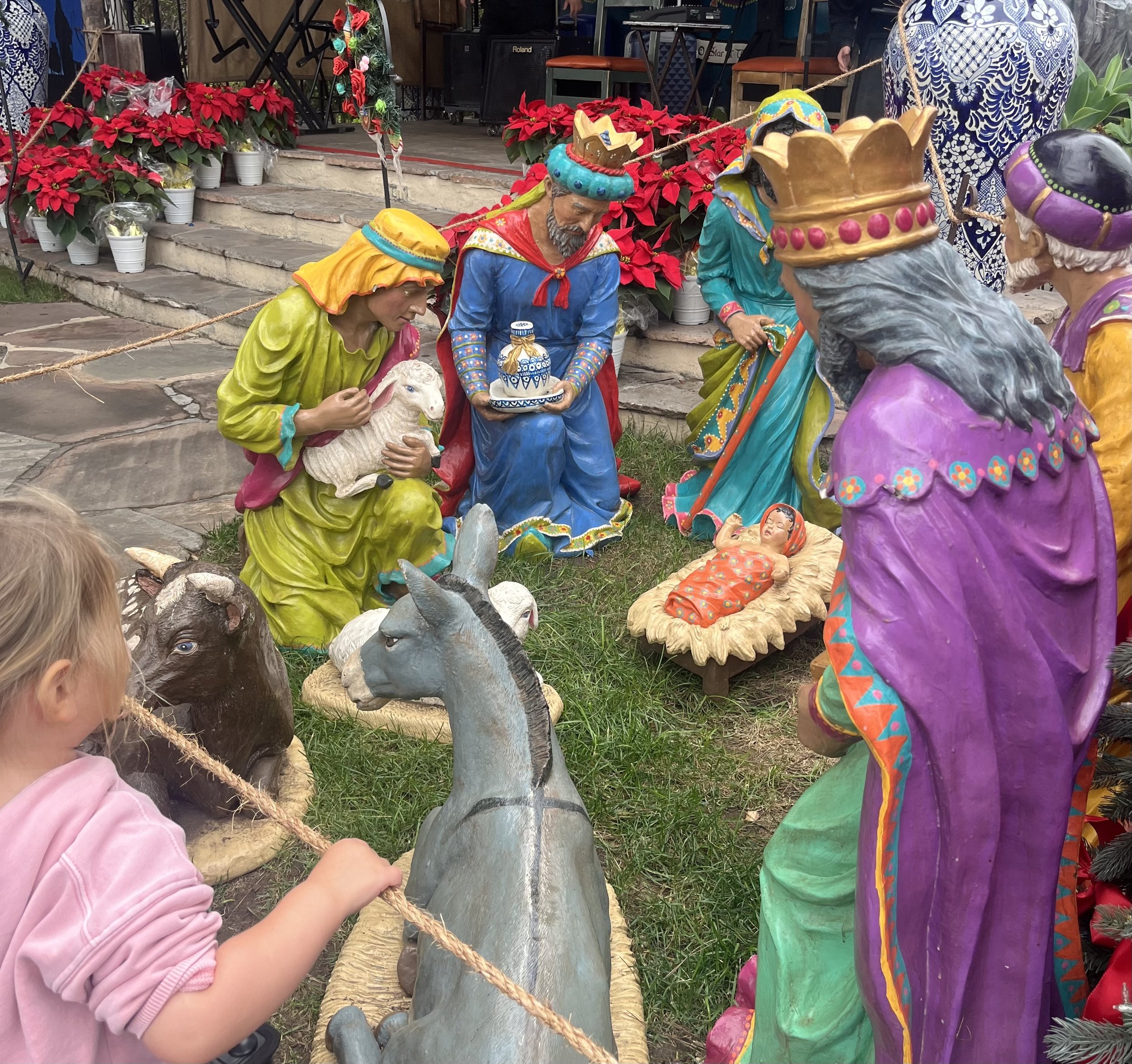
Picture caption: Contemplating the misogynistic nature of the story of the three wise men.
Matthew 2:1-12
Every night dreams do their essential work of emotional regulation whether we pay attention to them or not. But when we pay attention, we can be rewarded with insight, creativity, resilience and growth.
Dear Savannah and Sutton,
You know of my tremendous respect for dreams. I believe they are an amazing resource on the inner journey toward self-awareness, insight and spiritual renewal. Thank you for being a listening ear to my many ruminations on my dreams and yours. As you have heard me say, everyone dreams every night. And every night dreams do their essential work of emotional regulation whether we pay attention to them or not. But when we pay attention, we can be rewarded with insight, creativity, resilience and growth. My New Year’s resolution is to take 5 minutes each morning before I get out of bed to reflect on my dreams. I invite you to hold me accountable!
-Dad
Inside Out Lectionary Letters
Readings for January 4 (or January 6), 2026
Isaiah 60:1-6 / Psalm 72:1-7, 10-14 / Ephesians 3:1-12 / Matthew 2:1-12
Summary of Matthew 2:1-12 - The Visit of the Magi
Magi (wise men) from the east, see a star that they believe is a signal or sign regarding the birth of the king of the Jews. They travel to Jerusalem to inquire of King Herod about the location of this birth. King Herod is disturbed by this news, as is all Jerusalem. He gathers the chief priests and scribes, who tell him that the Messiah is to be born in Bethlehem, citing Micah 5:2 as prophecy. The star leads the Magi to the exact location, where they find Mary and the child. They present gifts of gold, frankincense, and myrrh. Warned in a dream not to return to Herod, the Magi go back to their country by another route.
Scripture as a Mirror of the Soul
The Magi were likely gentile scholars from an area near Persia or Babylon. Some believe that the inclusion of this story indicates that from birth Jesus’ work was intended to include the gentile world. And the inclusion of the Micah reference (5:2) reveals the perspective that Matthew has of connecting the circumstances of Jesus’ life to the messianic prophecies of the ancient Jewish writings.
If we are to live out the Good News, then the gospel story must be told from the inside out. If the outward is a reflection or projection of the inward, then what does this story reveal about the pilgrimage within us?
The scope of who we are is far greater than we yet understand. There are parts within that are as far removed from our consciousness as Persia was from Bethlehem. Yet those parts often have a better grasp of the realities of the Kingdom of God than the authorities that rule the conscious life.
There is a wisdom within me, and you, that is both reasonable (scholarly) and intuitive (mystical). But I am usually skeptical of one or the other. There is an inner Magi that knows how to hold the two in balance, and take action with belief and grace.
My consciousness is plagued with King-Herod-like paranoia and protectionist power struggles that screen out the good and the grace-filled moments that serendipitously come across my path.
I have a Herod inside of me, whose voice needs to be heard, but needs to NOT be the king. Because, with the Herod voice at the center of my life, when Herod is troubled, all Jerusalem within me is troubled as well. I can quickly become manipulative, conniving and even violent.
The inner Magi can lead us to seeing fingerprints of the divine in the most unexpected places; the stars, the fearful King, the humble town, and even in dreams. This posture of openness and anticipation seems to often be accompanied by a sense of gratitude for the outward experiences that affirm the inward journey, and a posture of generosity toward others.
Finally, what about the dream? Maybe we don’t give it a second thought. However, if we look past this singular passage, we should note that the Christ child, and those around him, are protected by four different dreams.
Matthew 1:20 The Lord appeared to Joseph in a dream and told him to take Mary as his wife.
Matthew 2:12 The Magi were warned in a dream not to return to Herod.
Matthew 2:13 Joseph was told in a dream to take his family to Egypt.
Matthew 2: 19-20 An angel appeared to Joseph in a dream and told him to return to Israel.
Dreams are referenced throughout scripture, yet most of the modern church has very little to say about them. Nevertheless, they provide a wonderful pathway to the inner life, and a way by which to interact with the unconscious parts that can offer Magi-wisdom for our journey of faith.
Becoming What You Were Made To Be
Psalm 148
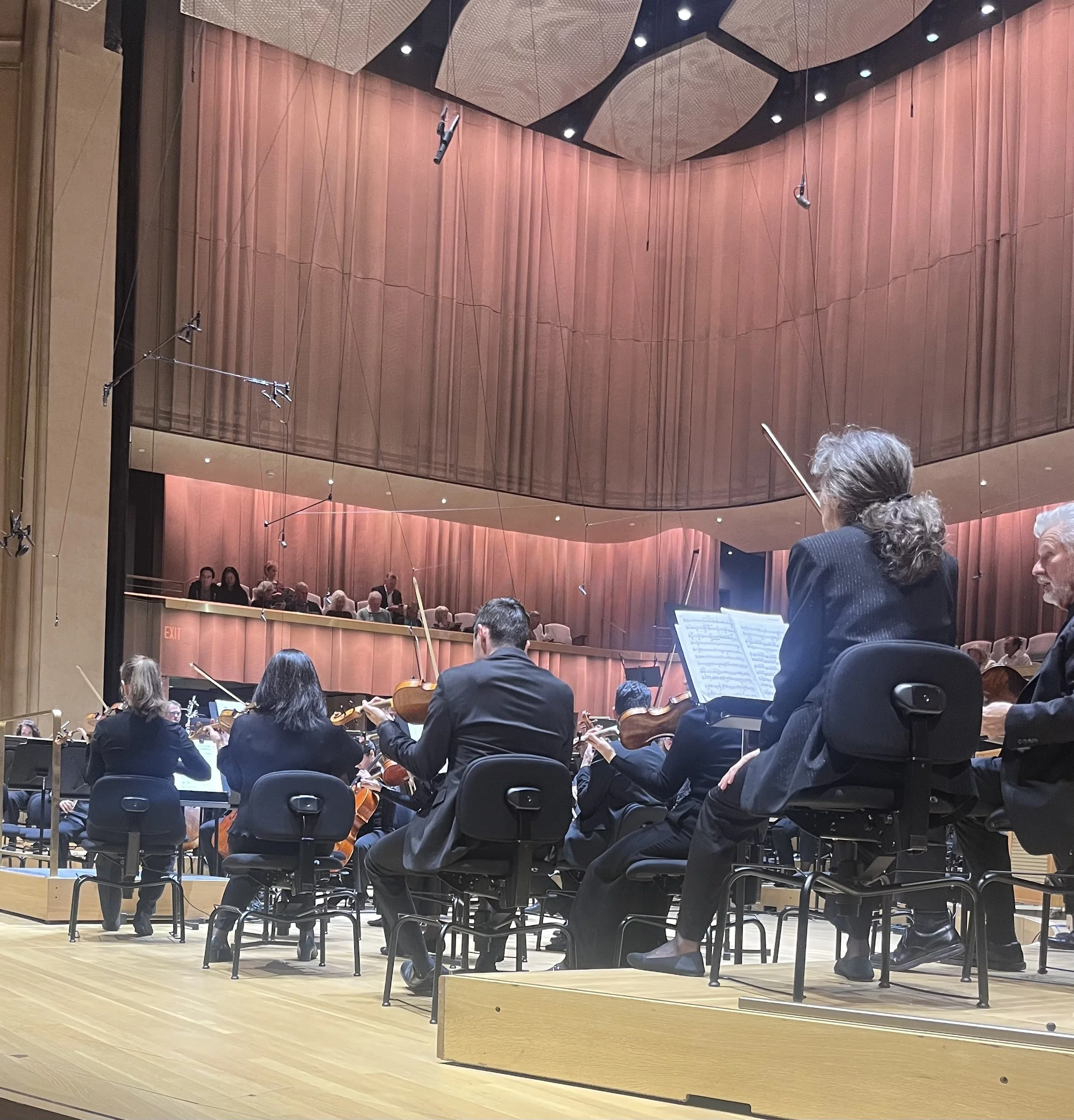
How boring it would be if everyone and everything played the same note. So why should we expect all of the parts within us to play the same note? We are our own orchestra learning to play a beautiful symphony.
Dear Sutton and Savannah
I really don’t know what you were made to be, but I am in awe of what you have become. The notion of there being one best divine plan for your life just doesn’t make sense. Each decision we make, and every response we may have to any given circumstance, presents multiple pathways for our future. We are participants in mapping the outcome of our life. The poet of Psalm 148 invites all the characters of the outward cosmos and all the characters of the inner life to sing their own unique song of praise; everything in its own way, and every one in their own voice. I hope and pray you never stop singing your unique song in your unique way.
-Dad
Inside Out Lectionary Letters
Year A - First Sunday After Christmas
Readings for December 28, 2025
Isaiah 63:7-9 / Psalm 148 / Hebrews 2:10-18 / Matthew 2:13-23
Summary of Psalm 148
This psalm is part of the closing collection of psalms that includes Psalms 146-150. Some believe that it was written as part of the Jewish return to the promised land following the exile in Babylon. The psalmist invites every part of creation to praise the Creator.
Scripture as Mirror of the Soul
We often consider the Psalms as instructional. They teach us about life, its struggles and its joys, its hardships and its celebrations. They teach us how to pray, how to praise, and how to lament. They invite us to both think and feel. What do they teach us about the poet? How might the poetry reflect the inward journey of the poet, and then what might that lead us to consider in our own inner journey?
The poet takes inanimate objects and invites them to be animated (e.g. sun, moon, stars, heavens, waters, mountains). Maybe the divine is infused into all of creation, and maybe we just don’t have ears to hear the way they sing the song of creativity and life. What are the inner parts represented by these symbols?
What about the shadow parts of our life; the parts tucked away in the unconscious; the sea monsters, the deeps, fire and hail, snow and frost, and stormy wind? Redemption includes all the parts of ourself. And redemption is not a denial, squelching or ignoring of their voice, but rather a balanced integration of the unique song they sing, and gifts they have to offer.
What about the parts within; that animal-like instinctual side, the foundational mountain-like parts, the creative side that takes flight like a bird, the life-giving trees within that bear fruit and give birth to new life, the masculine voice, the feminine voice, the innocent voice of the child, the invincible voice of the youth, the seasoned voice of the middle-aged and the wise voice of the old? They all exist within.
It doesn’t seem that we were ever intended to be one singular voice, but rather a collection of voices or instruments, playing unique notes of melody and harmony, that collectively form a single song of praise. How boring it would be if everyone and everything played the same note. So why should we expect all of the parts within us to play the same note? We are our own orchestra learning to play a beautiful symphony.

Let’s Talk
Matthew 2:13-23
The most important journey we take is the inward journey. And, the most important conversation we have is the conversation we have with ourself…The journey to health seems to inevitably lead a person to confront those ideas, experiences, wounds, trauma, voices, institutional values and cultural norms that have kept us bound and enslaved. Freedom comes, not from ignoring them, but from facing and confronting them.
Dear Sutton and Savannah
I think the most important journey we take is the inward journey. And, I believe that the most important conversation we have is the conversation we have with ourself. There are so many parts of our personality that generally remain in the unconscious. Difficult or emotionally-charged circumstances can often expose those parts. And they may surprise us. Likewise, we are often infatuated (attracted or repulsed) by those people who carry the very characteristics that are undeveloped in ourselves. When those various parts surprise you, I hope you will greet them with grace, love and curiosity.
-Dad
Inside Out Lectionary Letters
Year A - First Sunday After Christmas
Readings for December 28, 2025
Isaiah 63:7-9 / Psalm 148 / Hebrews 2:10-18 / Matthew 2:13-23
Summary of Matthew 2:13-23
Matthew continues the story of Joseph, Mary and Jesus. In response to a dream, Joseph takes his family to Egypt. King Herod realizes that he has been outwitted by the Magi and takes horrible vengeance on the people of Bethlehem. After some time passes, Joseph and his family return to Israel per the instruction of an angel in a dream. Finally, another dream instructs Joseph to settle with his family in Nazareth in the area of Galilee.
Scripture as Mirror of the Soul
This passage raises several difficult questions.
1. Why did God save the baby Jesus, but didn’t save all the other children in the Bethlehem area from the savagery of King Herod?
2. If God is sovereign, why is someone like King Herod, or his son Archelaus, allowed in power at all?
I have heard explanations and reasons that have been offered in response to such difficult questions. But they never seem adequate, particularly for those who suffer severe pain, or grieve horrific loss. Sometimes the only honest answer is “I don’t know.” My experience, or knowledge, or insight is inadequate to provide a response to such a question. And maybe it leads to another important question, “Would having an answer matter?” Or maybe it leads to the introspective question, “Why do I need an answer?”
What if we moved from the obsession of looking at all the outward circumstances, and instead heard the story as an invitation to look inward. The questions then change.
1. If King Herod represents a part of me (or you), what part might that be? The jealousy part of me? The part of me that is terrified of losing control? The out-of-balance competitive masculine energy that only defines success in terms of who I defeat?
All of us have a King Herod within. It is part of our shadow side. We project it onto the people we hate. It will lurk in the unconscious, affecting us in toxic ways until we begin to acknowledge it, and bring it to the surface. Doing so is an essential part of the journey to health.
2. If Joseph is a part of me (or you), what part might that be? The part that is sensitive to the divine voice within? The intuitive part?
I find it fascinating that the divine voice within leads Joseph to the land of enslavement (Egypt). The journey to health seems to inevitably lead a person to confront those ideas, experiences, wounds, trauma, voices, institutional values and cultural norms that have kept us bound and enslaved. Freedom comes, not from ignoring them, but from facing and confronting them.
3. If Jesus represents a part of me (or you), what part might that be? The birth of consciousness? A new idea, direction, value or identity?
The birth of something new often feels as fragile as a newborn baby. It feels like we never have enough knowledge to protect that new life. However, knowledge is not the only resource we have. Intuition, insight, common sense, love and grace provide a wisdom that takes us beyond our knowledge. Listening to that divine voice within, will lead us to engage the shadow, confront the land of enslavement and trek through the valley of the unknown on our path to health, wholeness and freedom.

Does God get Angry?
Psalm 80:1-7, 17-19
Anger is an amazing open door to a better understanding of ourselves; our fears, our insecurities and our rigid thinking. So in that sense, anger is sacred. Instead of shaming our anger, or nursing our anger, we should simply listen to our anger.
Dear Savannah and Sutton,
Does God get angry? I don’t know, but I don’t think so. I know that I get angry, and my anger is typically a result of things not going my way, not according to my plans, or not in accordance with what I think is right. And usually it comes when I am surprised that it didn’t go my way. Jesus apparently got angry when the temple merchants weren’t acting the way he thought they should. I am guessing he was surprised at their audacity. But I also think that the surprise and anger is attributable to his human nature. Whatever God is, I don’t think surprised or angry are attributes. However, I do think anger is an amazing open door to a better understanding of ourselves; our fears, our insecurities and our rigid thinking. So in that sense, anger is sacred. Maybe instead of shaming our anger, or nursing our anger, we should simply listen to our anger.
Just thinking out loud. I love you, -Dad
Inside Out Lectionary Letters
Year A - Fourth Sunday of Advent
Readings for December 21, 2025
Isaiah 7:10-16 / Psalm 80:1-7, 17-19 / Romans 1:1-7 / Matthew 1:18-25
Psalm 80 can be considered as a prayer for the community as it asks God to bring restoration. It remembers God’s past faithfulness, laments the present suffering, and pleads for God to once again bring salvation and renewal. The connection to this week’s gospel reading is certainly evident in the frequent plea that God would “come and save us,” which mirrors the name given to Mary’s child; Jesus, which means the Lord saves.
The psalm is attributed to Asaph, as are 11 other psalms. Asaph was a Levite, specifically from the family of Gershon (1 Chronicles 6:39–43). He was appointed by King David as one of the chief musicians to lead worship before the Ark of the Covenant (1 Chronicles 15:16–19). His role was not just to play music but to prophesy through song (1 Chronicles 25:1–2).
I imagine the original music of this psalm would have been bleak and harsh. Maybe it is filled with minor chords. I say this because the psalmist uses lyrics of lament and despair.
We often project onto God characteristics that are actually within us. So when the psalmist accuses God of smoldering anger, we should at least consider that the singers are actually the ones harboring anger and resentment. And the solution to that anger is to pay attention to the divine voice within. Outward prosperity usually just delays the consequences of inner conflict. God’s invitation to salvation is an invitation to make peace with the enemy within.
As has been said before, our outward experience is often a reflection of our inner journey. In this psalm the community is contentious to the neighbors and is mocked by their enemies. In individual terms, this means that an individual’s persona (the way they present themselves to others) is no longer getting the results they desire. Everyone develops a persona based on what is believed to be socially acceptable or, more accurately, the way a person wants to be seen by others. It is not the authentic self, but rather the self that navigates daily interactions in order to get needs met. When the persona fails to meet the expectation of others, or fails to satisfy the individual, the person is forced to consider how vast the chasm is between the persona and the true or authentic self. And this is where the prayer of restoration takes root. Our willingness to connect to the divine within, to receive God’s grace for our anger, and to seek healing for our shame and contentiousness, initiates salvation and restoration. Then we might realize that love shines on us, and can radiate through us.
Prayer
Lord God, we listen for Your voice. Restore what feels broken, revive what feels withered, and protect what You have planted in us. Shine Your love upon us, that we might be saved. And having made neighbors with the enemies within, may our face radiate love to all we meet. Amen.

Imagine That!
Matthew 1:18-25
This is the dynamic energy of both the masculine and the feminine parts. It beckons Joseph to ignore the internalized opinions of others, push against the norms of the culture and embrace the prospect of a new adventure, a new way of thinking, a new way of risk-taking, a new way of living
Dear Savannah and Sutton,
The inner journey requires imagination, and simultaneously produces imaginative ideas, creative possibilities and transformative options. We tend to be dominated by other people’s imagination; their music, their movies, their architectural designs, and their creative inventions. The inner journey moves you from the outward experiences that you take in with your senses, to the domain of the imagination where you see with new eyes. Give your soul the chance to let your imagination run wild.
-Dad
Inside Out Lectionary Letters
Year A - Fourth Sunday of Advent
Readings for December 21, 2025
Isaiah 7:10-16 / Psalm 80:1-7, 17-19 / Romans 1:1-7 / Matthew 1:18-25
Summary of Matthew 1:18-25
This passage tells the story of the birth of Jesus Christ. It provides insight into Joseph’s role in the story. In Jewish culture, betrothal was a legally binding contract, stronger than most modern engagements. Mary’s pregnancy, therefore, was a major scandal in the eyes of society, and Joseph’s response shows both compassion and integrity.
Joseph is portrayed as a model of obedience and mercy. He balances justice (honoring the law) with kindness (protecting Mary). His decision to follow the angel’s instruction shows his trust in God over social convention.
An angel of the Lord appears to Joseph in a dream, telling him not to be afraid to take Mary as his wife. Joseph obeys the angel’s command. He takes Mary as his wife but does not consummate their marriage until after the child is born. He names the child Jesus, as commanded.
Scripture as a Mirror of the Soul
This is the fourth Sunday of Advent. It is the week in which we celebrate the birth of Jesus. The practice of giving gifts is connected to the gifts the wise men brought with them when they made their pilgrimage to the birthplace, as well as an acknowledgement of God’s incredible gift of redemption. In all of the celebration it is easy to forget some of the difficult questions one might have with this passage, as well as important considerations that might get overlooked in the frenzy of Christmas pageants, musical presentations, and nativity scenes.
First, a few of the questions:
The first half of Matthew chapter one is dedicated to the genealogy of Joseph, covering 42 generations. This is immediately followed by a statement that Joseph was not the biological father. What then is the purpose of listing the geneology of Joseph?
If “all of this took place to fulfill what the Lord had said through the prophet” (Isaiah 7:14), then why did the angel instruct Joseph to give him the name Jesus instead of Immanuel?
A dream plays a crucial role in this incredibly important passage. Why? Is there something I should learn from that?
Teaching paths for this passage often include instruction or reflection on the names Immanuel (God with us) and Jesus (the Lord saves). Or we glean a great deal of wisdom from considering the faithfulness of Joseph and his trust in the message of God, and his faith in the future provisions of God.
Joseph is exhibiting great compassion for Mary in wanting to handle the unexpected pregnancy in a fashion that will not expose her to humiliation or shame. In psychological terms, he is using his static feminine energy. This is the part of Joseph that is sensitive to other people’s pain, and cares for their well-being. On the other hand, he has a bent toward the masculine side that pays attention to rules and society’s order. The rules call for a divorce and he feels the need to follow the rules. This internal tension is often exemplified in the conflict between the mind (typically ruled by logic) and the heart (sensitive to emotions and intuition). This is the dilemma of the push and pull of the masculine and feminine parts of our self. For Joseph this results in a compromise; he decides to put her away (as a nod to the static-masculine need to follow the rules), but to do so privately (out of respect for the static-feminine need to be compassionate).
There is another voice that Joseph hears. It is a divine voice within, that is personified in an angelic figure and points to a different way. The voice encourages him to take a radical approach; stay with Mary and have the child. This is the dynamic energy of both the masculine and the feminine parts. It beckons him to ignore the internalized opinions of others, push against the norms of the culture and embrace the prospect of a new adventure, a new way of thinking, a new way of risk-taking, a new way of living. For Joseph, this is the embodiment of the name of Jesus; the Lord saves. Joseph is becoming a new creation where all the different aspects of himself, the masculine side, the feminine side, the static energy and the dynamic energy all have a voice in the decisions and choices of his life.
All of this came to Joseph in a dream. Maybe we should pay more attention to dreams. Matthew’s account of the birth and protection of Jesus actually contains four dream stories. We will consider the significance of this when we look at the passages from chapter 2 of Matthew.
The Image of the Self
Psalm 146:5-10
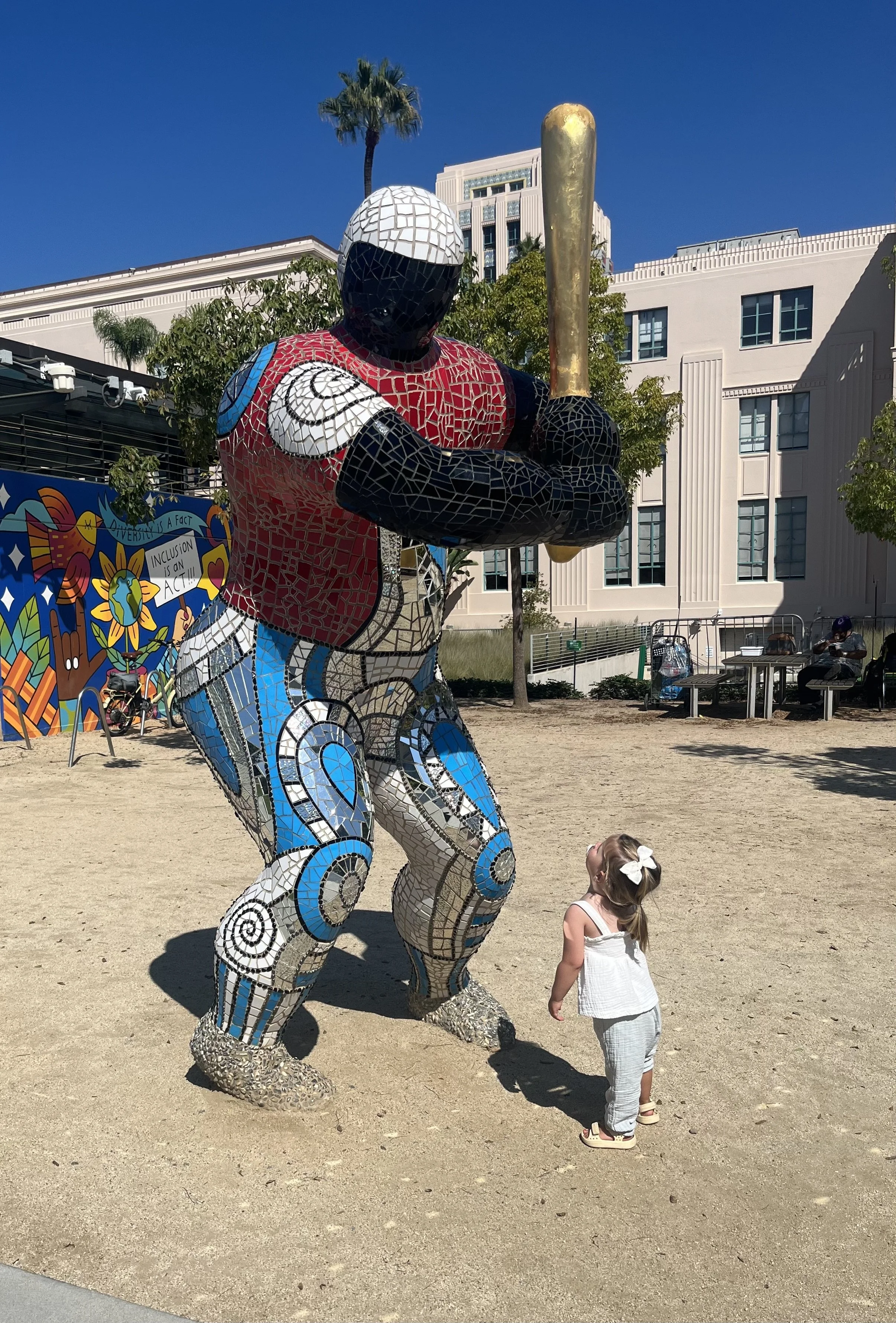
The journey inward opens up our vision to a self that is underneath all of the distorted graffiti of our outward experiences. It is a self that holds the image of the divine. It is a self that was and is and always will be fearfully and wonderfully made.
Dear Savannah and Sutton,
When I take a trolley here in the city, I often pass by buildings that have graffiti painted on the walls. In some cases I can see that the wall has been painted over many times, resulting in layers upon layers of graffiti. I feel like that is also true of humans. Advertisers, social media, comments from friends, comparisons to others, religious rules, and social norms are all sources of “graffiti” that covers over a person’s true identity. I know that even my parenting contributed another layer of paint to the masking of your true self, and I am sorry for that. I hope that the inward journey has already led to a re-discovery of the beautiful, wonderful, magnificent you that has always formed the core of who you are.
-Dad
Inside Out Lectionary Letters
Year A - Third Sunday of Advent
Readings for December 14, 2025
Isaiah 35:1-10 / Psalm 146:5-10 / James 5:7-10 / Matthew 11:2-11
The final five psalms all begin and end with the Hebrew phrase Hallelujah Yah (Praise the Lord). They serve as a final doxology in the collection of songs, focusing on praise as a vital aspect of faith.
In Psalm 146, the listener is cautioned against trusting in earthly power, and invited to put hope in the Lord God. The psalmist contrasts the fleeting power of human leaders with the eternal reign of God. It celebrates God as the faithful Creator and compassionate King. In verses 7-9 we find a link to the Gospel lectionary reading for the week, in that the list of God’s attributes are comparable to the declarations of Jesus’ ministry in Matthew 11. It is both a psalm of comfort and a call to trust in God.
The journey of faith invites us to move from the obsession we have with outward circumstances and events to reflection on the inner world of thought, feelings, intuition, conflict, fear and faith. We now move from simply taking in information through our senses to listening to the inward dialogue of our soul. We move from seeing creation in terms of the heavens, earth, sea and all that is within them, to considering the mind, the heart, the unconscious and all that is within them.
In the inner space of our being we consider the parts of ourselves that are oppressed and marginalized by our own defense mechanisms. We try to hear the voice of those parts of ourselves that are malnourished and hunger for grace instead of judgment. We search for the keys to unlock the chains of criticism that have kept us from living full and free.
Our inner journey is often hindered by our preoccupation with those whose power is temporary, whose judgement is skewed and whose treatment of us is objectively wrong. We give them royalty status because when we first encounter them we are children. We have no experience against which to compare their statements, treatment or behavior. We don’t know that they are mortal with their own set of problems and dysfunctions. So we hold onto beliefs about ourselves that are not based on truth, but rather based on another person’s psychosis. The journey inward opens up our vision to a self that is underneath all of the distorted graffiti of our outward experiences. It is a self that holds the image of the divine. It is a self that was and is and always will be fearfully and wonderfully made.
Prayer
Lord, I put my trust in You—the Eternal One who reigns forever. Guide me as I try to wean myself from relying on shifting human opinions and powers, and root me instead in my true authentic self. Open my eyes to see the vulnerable and wounded side of myself so that I might then actually have eyes to see the wounded around me. And give me courage to act in love toward both. Amen.
Today’s Healing, Tomorrow’s Hassle
Matthew 11:2-11
Living in harmony with our true self is itself a spiritual revolution, and blessed are those who don’t fall away from the work simply because it’s work.
Dear Savannah and Sutton,
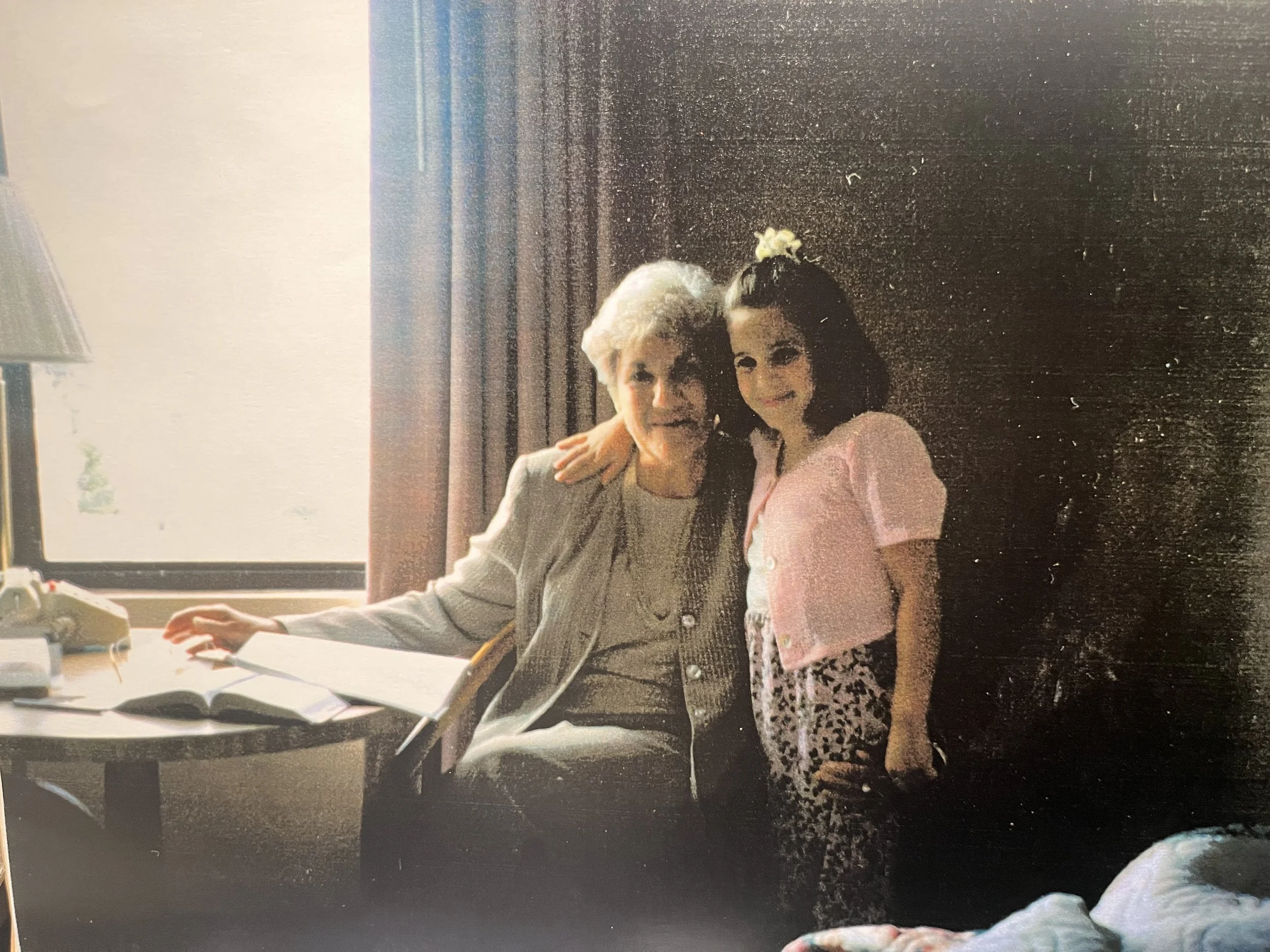
I remember that your grandma (Mimi) used to say, “You can’t have privilege without responsibility.” I think what she meant was that with every gift, every talent, every blessing and every opportunity comes a responsibility to use what has been received in life-giving ways. And, there are a million different ways to do that. Often the responsibility feels like work; sometimes hard work. But I think that in the work you discover that there was more to the gift than you ever imagined. (The privilege of having you two as daughters is the perfect example.)
-Dad
Inside Out Lectionary Letters
Year A - Third Sunday of Advent
Readings for December 14, 2025
Isaiah 35:1-10 / Psalm 146:5-10 / James 5:7-10 / Matthew 11:2-11
Summary of Matthew 11:2-11
In this passage, John the Baptist is in prison. He hears reports about Jesus’ ministry and sends his disciples to ask Jesus, “Are you the one who is to come, or should we expect someone else? Jesus responds by pointing to the signs and wonders that are part of his ministry.
After John’s disciples leave, Jesus turns to the crowd and affirms John’s ministry. Jesus identifies John as the messenger foretold in Malachi 3:1: “I will send my messenger ahead of you, who will prepare your way before you.”
Scripture as a Mirror of the Soul
Matthew 11 continues the story of John and his cousin Jesus. John, who is in prison, sends some of his students to talk with Jesus. We don’t know if John is wondering if Jesus is actually the Messiah, or if he simply wants his students to see for themselves. Jesus responds to their inquiry with a listing of the outcomes of his ministry. However, he concludes with a rather cryptic statement; “Blessed are those who do not fall away on account of me.”
Who would fall away on account of Jesus? I can’t imagine it would be the blind who received their sight, the lame who could now walk, those with leprosy who were healed, those whose lives were extended or the poor who received hope. But maybe… Maybe the work that follows healing is not easy. What happens when a person’s sight is restored and what they see is repulsive, or when a person can walk again and is expected to carry a full work load. How about when a person is healed of leprosy but still has to deal with the horrible community stigma associated with one who had that disease, or when one’s life is extended but still faces hostile family conflicts. What about the person who hears the good news for the first time, but sees no economic relief to the plague of poverty.
Better yet, let’s consider that the outward manifestations of Jesus’ ministry are an invitation to consider the inner healing of our soul or psyche. When I am given eyes to see social injustice in places I had never seen it before, what am I to do with that? Or what if I catch a glimpse of how I have benefited from social systems that honored me with privileged status but in so doing kept others oppressed? I may not have asked for that privilege, nor ever intended for others to be hurt, but that’s how social systems sometimes work. My blinded inward eyes see and I don’t like what I see.
How about the toxic attitudes within that fester like a leprosy of the heart. I externalize all those toxic attitudes and project them onto others. I vilify others, treating them as despicable, and ignore the parts of me that exemplify those same characteristics which I accuse others of having. The healing within takes a lot of work, and feels like a far greater miracle than the external healing of skin disease.
The work of inward healing is not easy, but it is incredibly rewarding. The transformation of our identity can be painful, but it also brings with it unimaginable freedom. Living in harmony with our true self is itself a spiritual revolution, and blessed are those who don’t fall away from the work simply because it’s work.

Hearing Our Wounds
The anger of our wounded parts needs heard. The fear attached to the darkness of our feelings, needs acknowledged. The loneliness of our shame needs accompanied.
Inside Out Lectionary Letters
Dear Sutton and Savannah,
You amaze me with how much you juggle; job demands, a marriage relationship, two children in diapers, and numerous other commitments. How do you do it? Finding time to reflect on the inward journey seems impossible when life circumstances demand your constant engagement. If you find spare moments, or budget personal time, I encourage you not to fill it with guilt, or cram it with a check list of health activities. Just breath. Sit for a moment and notice what it feels like to rest. I know it won’t last long, but have a moment where nothing is everything.
I love you, -Dad
Year A - Second Sunday of Advent
Readings for December 7, 2025:
Isaiah 11:1-10 / Psalm 72:1-7, 18-19 / Romans 15:4-13 / Matthew 3:1-12
This psalm may have been a coronation prayer for King Solomon, asking God to empower the king to rule with justice and compassion. As indicated in verse 20, Psalm 72 concludes Book II of the Psalms. Book II is comprised of Psalms 42–72. These Psalms are described in verse 20 as the prayers of David, son of Jesse. Maybe this was David’s prayer for the coronation of his son.
Psalm 72 paints a picture of the ideal king. It celebrates both human kingship under God and the divine promise that one day God’s rule of peace, justice, and abundance will fill the earth. The psalm closes with doxology, blessing the Lord God of Israel who alone does wondrous things. His glorious name is to be praised forever, and His glory will fill the whole earth.
One of the axioms regarding inward work is that we project outwardly what is happening inwardly. We often don’t see this in ourselves, because much of the inward life is happening unconsciously. We have fears we try to ignore, biases we try to deny, conflicts with our shadow side, and patterns developed in childhood that often rule our outward behavior. Even though the Psalm may be divinely inspired, it still reflects the inner journey of the writer. Thus it can be an instructional psalm as to how we might hear our inner voice.
The psalmist wants justice, righteousness and prosperity. He sees in the world around him the very thing he longs for inwardly. Probably all of us can relate to the pain of injustice; the feeling of being cheated, mistreated, abused, and powerless to bring about change. The outward injustice may have long since subsided, but the inward wounds may last longer than we could have imagined. Self-righteousness may grow as a salve for the unhealed wounds, but true righteousness is thwarted by bitterness, resentment and vilification of those in power.
The anger of our wounded parts needs heard. The fear attached to the darkness of our feelings, needs acknowledged. The loneliness of our shame needs accompanied. The psalmist wants the oppressor crushed. That’s the outward solution to the inward pain. It might bring some relief, but not inward healing; not redemption. As the psalmist declares in the closing doxology, it is divine love, the Lord God, who takes up residence within us, that alone is able to do marvelous things. We are invited into the journey of facing our wounds and our anger, our feelings and our fear, our shame and our loneliness. And to do so with a posture of grace, curiosity and hope. As the inner world experiences healing, we are one step closer to the coronation of a new world order.
Prayer
Lord, reign in my heart with justice, compassion, and peace. Let Your love transform and redeem. Align my inner life with Your ways so that my thoughts, words, and actions reflect Your kingdom. May the peace You bring to me overflow into blessing for others, until the whole earth is filled with Your glory. But for now, maybe just a little bit of peace from 8-9pm after the kids fall asleep! Amen.

The Parts of our Personality
If we begin with the premise that all of us have within us different parts of our personality, then we might be led to ask the question, “how do these parts of ourselves grow, stay healthy, and work with the other parts to enable us to flourish?” In other words, how do we increase our self awareness and uncover the richness of the soul?
Dear Sutton & Savannah,
There is so much joy in watching your kids (our grandkids) grow. Even at this point, where you are still counting their age by weeks, their personality begins to form in such unique ways.
There are so many parts that comprise a person’s personality. I feel like the reading for today provides an opportunity to explore various parts of ourselves by seeing the characters of the story as emblematic of aspects of our personality. For example, John preaches a message of judgement. Can you identify a part of you that has a voice of judgement? Jesus comes with a message of redemption. Do you ever hear a voice of redemption inside of you? Let’s see where the story takes us.
I sure do love you, -Dad
Year A
Inside Out Lectionary Letters
Second Sunday of Advent - December 7
Isaiah 11:1-10 / Psalm 72:1-7, 18-19 / Romans 15:4-13 / Matthew 3:1-12
Summary of Matthew 3:1-12
This passage introduces John the Baptist as the forerunner of Jesus’ ministry. John appears in the wilderness of Judea, preaching a message of repentance. Matthew identifies him as the fulfillment of Isaiah’s prophecy.
John lives an austere life, wearing camel’s hair clothing with a leather belt, and eating locusts and wild honey. People from Jerusalem, Judea, and the surrounding region come to him, confessing their sins and being baptized in the Jordan River.
John harshly rebukes the Pharisees and Sadducees. He warns them not to rely on their status as Abraham’s descendants, but to produce fruit in keeping with repentance. John contrasts his baptism of water for repentance to the greater baptism of Jesus which is with the Holy Spirit and with fire.
Scripture as a Mirror of the Soul
This weeks reading introduces us to the ministry of John the Baptist. John is a dramatic character, whose words match the exotic nature of his lifestyle. He is provocative, even divisive. This passage, as well as this character, serve to introduce the ministry of the Christ. This passage provides a wonderful image of the nature of the prophetic voice, which is both forth-telling (the salvation message) as well as fore-telling (the anticipation of the work of Jesus). The problem with being a prophet is that they often get stoned (figuratively and literally).
The passage sets the stage for Jesus. An argument could be made that the point of these few verses is the baptism of Jesus by water and by the Holy Spirit, followed by the affirmation of the Father. But it is also worth exploring the nature of the prophetic voice as an expression of personality, and the inward nature of the work of Jesus in burning away “the chaff.”
If we begin with the premise that all of us have within us different parts of our personality, then we might be led to ask the question, “how do these parts of ourselves grow, stay healthy, and work with the other parts to enable us to flourish?” In other words, how do we increase our self awareness and uncover the richness of the soul?
These parts seem to have some consistency across humanity, but they also seem to be subjectively formed by each person’s experience, reflection and genetic makeup. For example, each of us seems to have aspects of ourselves that reflect a masculine perspective or voice and a feminine perspective or voice. We also tend to have parts that seem neither masculine nor feminine, but rather androgynous. There are parts of us which seem rather undeveloped and may come across like an infant, a child or an adolescent. We might have a part that dominates and another part that mostly stays silent until called upon. This type of framework raises questions about scripture which we may have never before asked.
John the Baptist speaks with a prophetic voice. In psychological terms it would be called the dynamic feminine voice. That voice or part of a person tends to be deeply connected to an intuitive sense. It comes to conclusions not necessarily by facts and logic, but rather by sensing something is true. John senses the truth in his cousin Jesus and courageously proclaims it.
At the same time John has a strong masculine approach. He lives in the wilderness, wears animal skins and demands a decision or choice. The way he integrates the two very different parts of himself draws a crowd from across the countryside, and sets the stage for the coming Christ.
A traditional approach to this passage might be to ask if there are sins for which I need to repent. Or to consider if being baptized would be the next appropriate step in declaring a commitment to the Kingdom of God. And if that resonates with you, great. However, how might this passage lead toward the inner journey? Here are some questions that might be derived from the text and lead to inward reflections:
What might the prophetic voice within me want to change in me so that the way of Christ could come to pass in me?
What part of me might resemble the Pharisees and Sadducees? (Appearing religious, but no evidence of love. Following the rules, but not the spirit behind the laws.)
Can I identify a judgmental voice inside of me? When is it helpful? When is it counterproductive? Can I identify a redemptive voice inside of me? Is it easy or hard to listen to that voice?

Grace Toward Ourselves
Until we make peace within, there will not be peace outwardly. And the path to peace is not through destruction, but through love. We are invited to love inwardly by receiving and practicing a radical form of grace toward ourselves.
To Sutton and Savannah, my two incredible daughters (and anyone else who might be interested),
The Lectionary is a series of weekly readings from the Bible that spans 3 years. It is intended to take the reader or listener through all sections of scripture. To do that the weekly readings include four readings: a Gospel reading, a Psalm reading, an Old Testament reading and a 2nd New Testament reading. My reflections are going to focus on the Gospel reading and the Psalm reading. I will send out the Gospel reading on Monday and the Psalm reading on Thursday. These will be sent during the week prior to the Sunday when they are used by many churches worldwide. If you want to read the actual scripture, you can tap or click on the scripture reference and it will take you to a website that will show you the reading.
-Dad
Inside Out Lectionary Letters
Year A - Psalm Reading
First Sunday of Advent (readings for November 30, 2025)
Isaiah 2:1-5 / Psalm 122 / Romans 13:11-14 / Matthew 24:36-44
Scripture as a Mirror of the Soul
Psalm 122 is one of the Songs of Ascents, believed to have been sung by pilgrims traveling to Jerusalem for festivals. The psalm is attributed to David and expresses joy and reverence for the city of Jerusalem as the spiritual and communal center of Israel.
The reference to thrones of judgment highlights Jerusalem not only as a religious hub but also the political seat of David’s dynasty. Justice, worship, and unity converge there.
The call to pray for Jerusalem’s peace has enduring significance. In Hebrew, “shalom” implies more than the absence of conflict—it includes wholeness, prosperity, safety, and harmony. For the psalmist, Jerusalem’s peace meant the flourishing of the entire community.
How does this Psalm draw us toward the inner journey of faith? Well the opening of the passage invites us to go to the house of the Lord. Jesus states in John 14 that if we love Him, we will obey his commands, and the Father will love us and make His home within us. We have become the house of the Lord. We are the new Jerusalem where God’s Spirit takes up residence. So the application of this Psalm to our life is to journey inward; to identify the many tribes or personalities within us, and to seek peace or integration.
We are invited to pray for the peace of our inner Jerusalem, the core of our identity. We seek the wholeness that comes with peace. Until we make peace within, there will not be peace outwardly. And the path to peace is not through destruction, but through love. We are invited to love inwardly by receiving, and practicing, a radical form of grace toward ourselves. It is a love that takes the hurting parts, the parts that evoke shame, the parts that hold grief, the embarrassing parts, the shadow parts and treats them with love. The prosperity that comes from love honors all of who we are by ushering in peace.
Prayer
Lord, unite the scattered parts of me and fill me with Your shalom. May the peace You give me ripple outward into my relationships, my work, and my world. Amen

Introduction to the Inside-Out Lectionary Letters (Advent 1)
It all begins with an idea.
To Sutton and Savannah, my two incredible daughters (and anyone else who might be interested),
As you already know, I don’t have many answers. I do have reflections, questions, thoughts and a lot of curiosity that I plan to share in this project. I hope you share yours as well.
I think scripture is often used by the Christian community as a weapon, a defensive explanation of values, an exploitive evangelistic mandate, an excuse to not engage, and an escape from responsibility. As a result, it is often dismissed by the non-Christian community.
Scripture may be a wonderful revelation of the Divine. But could it not also be a revelation of the Divine work within us of healing, restoration, integration and wholeness? This will be a three-year exploration of that theme.
This project follows my belief that the first step in understanding the Bible is to consider it as a revelation of that which is going on inside of the human soul. Stories that last for generations do so because they resonate with our inner journey. So what is the inner story that is depicted in the characters, plot lines and settings in scripture? Nothing really changes outwardly in our lives until something changes inwardly. So instead of looking at scripture as a collection of good stories and moral teachings, let’s look at how it invites us to reflect on our inner journey, nothing more. Then, if our inner soul heals and grows and flourishes, the outward life will reflect that change.
-Dad
P.S. Obviously, you don’t have to read any of this. My writing is probably nothing more than my desire to be known. And really what I most want you to know about me is this: I love you and am so proud of you just as you are. You two are the best!
Year A - Gospel Reading
First Sunday of Advent (readings for November 30, 2025)
Isaiah 2:1-5 / Psalm 122 / Romans 13:11-14 / Matthew 24:36-44
Summary of Matthew 24:36–44
Jesus speaks to His disciples about the unexpected nature of His return (often called the Second Coming). He emphasizes that no one knows the day or hour—not the angels in heaven, nor even the Son, but only the Father.
Jesus compares His return to the days of Noah, when people were living ordinary lives—eating, drinking, marrying—right up until the flood came and swept them away. In the same way, people will be caught off guard when the Son of Man comes. He uses the examples of two people in a field or two women grinding grain: one will be taken, and the other left, showing the sudden and selective nature of His return.
Jesus urges His followers to be alert and ready, because the Son of Man will come at an hour you do not expect.
Scripture as a Mirror of the Soul
The Gospel Lectionary reading begins with a very confusing set of images, supposedly intended to encourage people to be ready. The context is that Jesus is providing some of his last teachings to his disciples just days prior to his crucifiction. He tells them about ominous times to come.
In the future there will be a coming of the Son of Man.
No one knows when that will happen.
So, be ready.
However, it is hard to tell what “being ready” entails, or what the reward is for being ready. Here is what feels confusing:
In one analogy the return of Christ is compared to a thief!
In another analogy, the return of Christ is compared to a Master who cuts his unfaithful servant into pieces!
In one section the thief presumably takes the good stuff and leaves the bad behind. In another the Master takes the bad stuff, destroys it, and leaves the good stuff behind.
In the comparison to the days of Noah, we are simply told that the people were eating, drinking, and marrying, none of which is prohibited behavior, yet they were all destroyed.
The passage begins with men and women at work, half are taken and half are left behind. We don’t know if the good are taken, or the bad are taken. Their behaviors give us no clue.
The Christian community certainly makes a lot of assumptions about this reading, but many conclusions are not supported by the text. However, if we view the text from the perspective of “integration” (spiritual health and wholeness) we might find a more coherent understanding.
Concerning the two people in the field, is the hope that I am the one saved at the expense of the other, or is the hope that both are redeemed? If they both represent parts of me, then one might be my ego and the other my shadow. Integration is the only way both are saved.
Likewise, the passage speaks of both my masculine and feminine sides. One part I typically associate with my identity and the other I minimize as an inferior or inappropriate part of myself; again, my shadow. Through the hard work of acknowledgement-acceptantance-assimilation, the shadow portions of my life help me to redeem the out-of-balance portions of my life. Integration of these disparate parts is what brings about wholeness. Otherwise I lose them. They are stolen. They are pushed into the flood waters of the unconscious.
So, be ready to hear the voice of the unconscious. Listen to the shadow’s cries. Don’t be afraid of the dark, nor overly confident of the light. God’s Kingdom comes and God’s will is done when heaven and earth meet in me and in you. Then, not only are we transformed, but the way we interact with our respective communities is forever changed.